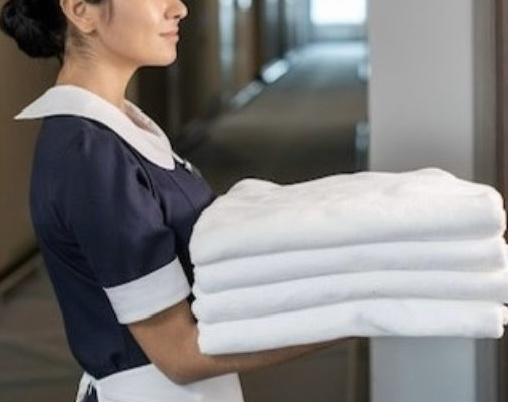

The Difference Between Hotel Housekeeping and Private Household Housekeeping
Hotel housekeeping and private household housekeeping share a common foundation: cleanliness, organisation, attention to detail and the ability to maintain high standards in demanding environments. However, despite these similarities, the two professions are significantly different in their daily responsibilities, working relationships, expectations and approaches to service.
For experienced hotel housekeepers considering a move into private domestic service, understanding these differences is essential. Working in a luxury hotel can provide valuable experience in professional cleaning, laundry management, room presentation and service standards. Yet maintaining a private residence for a high-net-worth (HNW) or ultra-high-net-worth (UHNW) family requires a more personalised approach, a strong sense of discretion and the ability to adapt to the preferences of an individual household.
In a hotel, housekeeping procedures are generally designed to maintain consistency across multiple rooms and accommodate changing guest requirements. In a private home, the housekeeper must understand how the family lives, protect personal belongings, maintain valuable interiors and ensure that the property operates according to established household routines.
Neither profession is inherently more demanding in every respect. Both require professionalism, reliability and technical skill. The difference lies in the environment, the nature of the responsibilities and the expectations associated with the role.
At Fully Staffed, we recruit experienced domestic and household professionals for private, HNW and UHNW families in London and internationally. Understanding the distinction between hotel housekeeping and private household housekeeping helps employers recruit appropriately and enables candidates to prepare for a successful career in private service.
This guide explains the main differences between the two professions, the skills that transfer between them, the additional competencies required in private households and how hotel housekeeping professionals can position themselves for domestic staff opportunities.
What Is Hotel Housekeeping?
Hotel housekeeping is the department responsible for maintaining guest rooms, public areas and other designated spaces within a hotel. Its primary purpose is to provide a clean, comfortable and presentable environment that meets the establishment’s service standards.
Depending on the property, hotel housekeepers may work in budget accommodation, boutique hotels, luxury hotels or five-star establishments. The working environment and level of service can vary considerably between these settings.
In luxury hotels, housekeeping standards may be exceptionally high, with detailed room inspections, specialist laundry services, carefully presented amenities and strict procedures for handling guest belongings.
Nevertheless, hotel housekeeping generally operates within a structured hospitality environment where tasks, performance expectations and reporting lines are defined by the organisation.
Typical Responsibilities of a Hotel Housekeeper
A hotel housekeeper’s responsibilities may include:
- Cleaning guest bedrooms and bathrooms.
- Changing bed linen and making beds to the hotel’s required standard.
- Replenishing toiletries, towels and guest amenities.
- Dusting furniture and cleaning mirrors, glass and other surfaces.
- Vacuuming carpets and maintaining floors.
- Reporting maintenance problems or damaged items.
- Following health, safety and hygiene procedures.
- Managing cleaning equipment and supplies.
- Collecting, sorting or transporting laundry.
- Preparing rooms for new arrivals.
- Following room inspection procedures and quality standards.
- Coordinating with supervisors, reception teams and other hotel departments.
The precise responsibilities depend on the role. A room attendant may focus primarily on guest rooms, while a senior housekeeper or executive housekeeper may supervise staff, allocate workloads, manage supplies and monitor departmental performance.
How Hotel Housekeeping Is Organised
Hotels generally use established procedures to maintain consistent standards across a large number of rooms.
Housekeepers may receive daily room assignments and work according to occupancy levels, guest departures, arrivals and the hotel’s operating schedule. Supervisors may inspect completed rooms and provide feedback where standards have not been met.
Performance can be measured through productivity, inspection results, guest feedback and adherence to established procedures.
In a luxury hotel, these systems support a consistent guest experience. Guests should receive the same expected level of cleanliness and presentation regardless of which member of staff prepared their room.
This emphasis on consistency is one of the most valuable aspects of hotel housekeeping experience.
What Is Private Household Housekeeping?
Private household housekeeping involves maintaining a family residence according to the employer’s individual requirements, lifestyle, routines and preferences.
The property may be a London apartment, a townhouse, a country estate or an international holiday home. The household may employ one housekeeper or operate a larger domestic staff team with clearly defined responsibilities.
Unlike a hotel, a private residence is someone’s personal living environment. It contains personal belongings, family routines, private spaces and possessions that may have significant financial or sentimental value.
The housekeeper’s role is therefore not limited to cleaning. Depending on the employment agreement, it may include laundry and ironing, wardrobe organisation, linen management, guest preparation, monitoring household supplies and helping maintain the overall organisation of the property.
The level of responsibility varies significantly between households, so a clear job description is essential.
Typical Responsibilities of a Private Housekeeper
A private housekeeper may be responsible for:
- Maintaining bedrooms, bathrooms, kitchens and living areas.
- Caring for delicate surfaces, bespoke furniture and specialist materials.
- Managing laundry, ironing and garment care.
- Organising linen cupboards and household storage.
- Maintaining the presentation of reception rooms.
- Preparing guest bedrooms before visitors arrive.
- Monitoring cleaning products and household supplies.
- Following individual preferences for room presentation.
- Reporting maintenance issues and damage.
- Coordinating with other domestic staff.
- Supporting seasonal organisation and property preparation.
- Maintaining confidentiality and respecting household boundaries.
Some positions also include simple cooking, wardrobe management, assistance with entertaining or coordination of selected household tasks. These additional duties should be specified during recruitment rather than assumed to be part of every housekeeping role.
A More Personalised Approach
The defining characteristic of private household housekeeping is personalisation.
A family may have specific preferences regarding bedding, laundry, storage, cleaning products, room arrangements and the presentation of personal belongings. The housekeeper must learn these preferences and apply them consistently.
For example, one employer may prefer a formal arrangement of cushions and decorative objects, while another may prioritise a relaxed and comfortable living environment.
Both households can expect exceptional cleanliness and attention to detail, but the finishing standards may differ.
A successful private housekeeper understands that the employer’s preferences form part of the service standard.
Hotel Housekeeping vs Private Household Housekeeping: The Main Differences
Although the two professions share technical skills, several important differences influence how the work is performed.
1. Standardised Procedures vs Individual Household Preferences
Hotels generally rely on established procedures designed to ensure that rooms are cleaned and presented consistently.
Housekeepers follow cleaning sequences, linen standards, amenity requirements and inspection criteria. These procedures allow the hotel to maintain quality across numerous rooms and shifts.
Private household housekeeping also benefits from structured routines, but the procedures are usually tailored to the property and the family.
A housekeeper may need to remember the preferred arrangement of a particular room, the correct care method for an individual piece of furniture or the family’s instructions for storing personal belongings.
The ability to follow instructions precisely while adapting to individual requirements is therefore especially important in private service.
What this means for candidates: Hotel experience provides a strong foundation in consistency, but candidates moving into private households must demonstrate that they can adapt established techniques to a specific home rather than relying exclusively on standard hotel procedures.
2. Temporary Guests vs a Long-Term Family Relationship
Hotel housekeepers typically prepare rooms for guests who may stay for one night, several weeks or longer. The relationship is usually with the hotel as an organisation rather than with one individual guest.
Private housekeepers often work with the same family over an extended period. They become familiar with the household’s routines, preferences and expectations.
This continuity can make the work more rewarding, but it also requires professional judgement and clear boundaries.
A housekeeper may learn when the family prefers rooms to be serviced, how they organise their personal belongings and which tasks should be completed before they return home.
The objective is to provide consistent support while respecting the family’s privacy and independence.
3. Guest Rooms vs Personal Living Spaces
Hotel rooms are designed for temporary occupation. The housekeeper’s job is to prepare the room for a comfortable and hygienic guest experience.
A private residence is a personal environment that may contain family photographs, confidential documents, valuable collections, sentimental objects and individual storage systems.
The housekeeper must respect these belongings and avoid unnecessary movement or handling.
For example, cleaning a desk in a private home may require additional care if personal papers or electronic devices are present. A housekeeper should follow the household’s instructions rather than reorganising the area independently.
This distinction makes discretion and respect for personal space particularly important in private domestic service.
4. Room Turnover vs Ongoing Property Maintenance
Hotel housekeeping often works around check-in and check-out times. Vacated rooms must be cleaned, inspected and made available for incoming guests.
Private household housekeeping is usually organised around the family’s daily life and the long-term condition of the property.
The housekeeper may maintain the same bedroom for months or years, monitor the condition of its furnishings and ensure that regular care prevents unnecessary wear.
The work may also include periodic cleaning and the preparation of rooms that are used less frequently.
Instead of concentrating primarily on preparing a room for the next guest, the private housekeeper focuses on maintaining the property as a whole.
5. Speed and Productivity vs Personalised Care
Hotel housekeepers often work within defined time allocations. Productivity matters because rooms must be prepared efficiently without compromising hygiene or quality.
Private household housekeeping also requires effective time management, particularly in large residences. However, the priorities may be different.
A housekeeper caring for a delicate antique, a designer garment or a specialist surface may need to spend additional time checking the correct treatment method.
The aim is not to work slowly. It is to balance efficiency with the level of care required by the property.
Employers should establish realistic schedules that account for the size of the home, laundry requirements, occupancy and any additional responsibilities.
6. Team-Based Work vs Independent Responsibility
Hotels often employ several room attendants, supervisors, public-area cleaners, laundry staff and other specialists. Tasks can be divided according to the department’s structure.
Private households may have a much smaller team. In some homes, a single housekeeper is responsible for most routine housekeeping duties.
This means that the individual may need to plan the working day, prioritise tasks, monitor supplies and recognise when a specialist contractor is required.
In larger residences, private housekeepers may work under a head housekeeper or house manager. Even then, the structure and responsibilities may differ from a hotel department.
Candidates should understand that private service can involve greater individual responsibility, although the level of independence depends on the household.
7. Formal Service Standards vs Household-Specific Expectations
Hotels usually communicate their service standards through training, departmental policies and inspection procedures.
Private households may have written procedures, but some expectations are communicated directly by the employer or through an established member of staff.
A housekeeper must be comfortable asking appropriate questions, listening carefully and clarifying instructions when necessary.
Assuming that every family expects the same presentation standard can lead to misunderstandings.
The best approach is to establish clear expectations during the induction period and refer to the agreed procedures when questions arise.
8. Professional Boundaries and Confidentiality
Confidentiality matters in both professions. Hotel staff must protect guest information and follow security procedures.
However, private housekeepers may have ongoing access to the same family’s personal living spaces and daily routines. They may become aware of travel plans, visitors, family arrangements and private conversations.
The expectation is to treat this information as confidential and never share it without authorisation.
Photographs of the home, details about the family and information about their routines should not be disclosed on social media or discussed outside work.
Private household professionals must also understand that being trusted with access to a home does not remove the need for professional boundaries.
9. Commercial Equipment vs Specialist Domestic Care
Hotels often use commercial cleaning equipment, standardised products and established laundry systems suited to high volumes of work.
Private residences may contain a broader range of materials that require individual care.
These can include natural stone, fine wood finishes, bespoke upholstery, antique furniture, delicate fabrics and specialist bathroom fittings.
A private housekeeper must understand the limits of ordinary cleaning products and recognise when the household’s approved procedures or specialist advice are required.
Using the wrong product on an expensive surface can cause damage that is costly or difficult to reverse.
10. Career Structure and Progression
Hotel housekeeping may offer a structured progression route through positions such as room attendant, senior room attendant, floor supervisor, assistant executive housekeeper and executive housekeeper.
Private household careers can develop in different directions.
An experienced housekeeper may progress to head housekeeper, work in a larger private residence or move into a broader role that includes household coordination.
Some professionals develop specialist expertise in laundry, wardrobe care or the management of housekeeping teams.
Progression depends on experience, the responsibilities available and the candidate’s skills. Moving from a hotel to a private household is one possible route, rather than a guaranteed promotion.
Which Skills Transfer from Hotel Housekeeping to Private Households?
Hotel housekeeping can provide an excellent foundation for private domestic service, particularly when candidates have worked in luxury hotels with demanding service standards.
The most transferable skills include cleaning techniques, room presentation, time management, laundry knowledge, organisation and professional conduct.
However, candidates should be prepared to demonstrate how they can apply these skills in a different environment.
Advanced Cleaning Techniques
Experience cleaning bathrooms, bedrooms, floors, mirrors and furniture is directly relevant to private housekeeping.
Hotel housekeepers often develop an understanding of suitable cleaning sequences, hygiene requirements and the importance of inspecting completed work.
These skills can be adapted to private homes, provided that the candidate learns the correct procedures for the property’s materials and finishes.
Attention to Detail
Luxury hotel experience can teach candidates to notice small imperfections that affect the presentation of a room.
This skill is equally valuable in private residences, where the standard may include carefully arranged furnishings, spotless mirrors, well-presented bedding and the correct placement of household items.
Candidates should be ready to explain how they maintain consistency without overlooking less visible areas.
Time Management
Hotel housekeepers often need to complete several rooms within a defined shift.
This experience can help private housekeepers plan tasks efficiently, especially when the household has multiple bedrooms, several bathrooms or substantial laundry requirements.
The key is to adapt the schedule to the home rather than apply hotel room timings automatically.
Laundry and Linen Handling
Hotel experience can provide useful knowledge of linen rotation, stain treatment, fabric sorting and the presentation of bedding.
These skills are valuable in private homes, although the household may have more varied requirements for delicate garments, personal laundry and specialist textiles.
Candidates should be honest about their experience with fine fabrics, pressing and wardrobe management.
Professional Conduct
Working in hospitality teaches employees to follow procedures, respect supervisors, communicate appropriately and maintain professional standards during busy periods.
These qualities are important in private households, where reliability and a respectful attitude contribute to a successful long-term employment relationship.
Skills Hotel Housekeepers Need to Develop Before Moving into Private Service
Technical cleaning skills alone may not be sufficient for a successful transition. Private household employment often requires additional competencies that candidates may not have developed in a hotel environment.
Learning to Care for Valuable Materials
Hotel housekeepers may work with high-quality furnishings, but the range of materials in a private home can be particularly varied.
A residence may contain handmade furniture, specialist finishes, valuable decorative objects, fine art and textiles that require individual treatment.
Candidates should learn to identify when routine cleaning is appropriate and when an item requires a specific product, approved method or specialist contractor.
A professional housekeeper never experiments with an unfamiliar treatment on a valuable item.
Understanding Personal Laundry
Hotel laundry departments may process large quantities of similar items using established systems.
Private household laundry can be more varied and personal. It may include tailored suits, silk dresses, cashmere knitwear, designer clothing, delicate underwear and garments requiring specialist dry cleaning.
The housekeeper needs to understand garment labels, sorting procedures, appropriate washing methods and the risks associated with heat or unsuitable detergents.
When wardrobe management forms part of the role, additional skills may be required in garment organisation, seasonal rotation and travel packing.
Adapting to a Family’s Lifestyle
Hotel housekeepers generally work according to the hotel’s operational schedule.
Private housekeepers must understand the family’s routine and work around it. This may involve adjusting room access, planning laundry around the family’s needs and coordinating tasks with other household staff.
The ability to adapt is particularly important when the household’s schedule changes due to travel, guests or family events.
Adaptability does not mean accepting undefined working hours. The schedule and any additional responsibilities should remain consistent with the employment agreement.
Working Independently
In a hotel, supervisors and departmental procedures may provide regular direction.
A private housekeeper working alone may need to organise the entire working day, identify priorities and manage routine tasks without continuous supervision.
This requires initiative, practical judgement and a willingness to ask for guidance when necessary.
Employers should explain the required level of independence during recruitment, as some private roles involve close supervision while others require substantial autonomy.
Maintaining Confidentiality
Candidates moving into private service must understand the importance of protecting the employer’s privacy.
This includes respecting personal belongings, avoiding unnecessary questions, following access instructions and keeping household information confidential.
Discretion should be demonstrated through behaviour rather than simply claimed during an interview.
The Importance of Discretion in Private Household Housekeeping
Discretion is one of the most important professional qualities in private domestic service.
A housekeeper may work in a home where family members conduct business, receive visitors, manage personal affairs or spend time away from public attention.
The employee’s responsibility is to maintain the property while respecting the family’s right to privacy.
Respecting Personal Belongings
A housekeeper should follow instructions regarding personal documents, electronic devices, jewellery, valuables and other belongings.
Items should not be moved unnecessarily, and anything found in an unusual place should be handled according to the household’s procedures.
Where an object requires cleaning but its handling is uncertain, the housekeeper should seek clarification.
Protecting Household Information
The family’s address, travel arrangements, routines, visitors and personal circumstances should not be shared outside the household.
Candidates should understand that confidentiality applies during employment and may continue after the employment relationship ends, subject to the applicable legal and contractual arrangements.
Working Without Intruding
Excellent private housekeeping often involves working efficiently without interrupting the family’s daily activities.
This may mean planning room cleaning around meetings, family meals or children’s routines.
The housekeeper should communicate appropriately and respect the household’s preferred approach to entering private spaces.
Discretion is not about avoiding communication. It is about communicating at the right time, sharing relevant information and respecting boundaries.
What Are the Standards in Luxury Private Households?
Luxury private households can have particularly high expectations regarding cleanliness, organisation, presentation and care.
However, there is no single standard that applies to every UHNW property. Requirements depend on the family’s lifestyle, the size of the residence, the materials within it and the scope of the housekeeping role.
Consistent Room Presentation
Bedrooms, bathrooms and reception rooms should be maintained to the agreed standard throughout the week.
This may involve carefully presented bedding, spotless mirrors, clean floors, correctly arranged furnishings and the replenishment of essential supplies.
Guest rooms may require additional checks before arrival, particularly if they have not been used recently.
Careful Handling of High-Value Interiors
Housekeepers should understand the correct care procedures for the surfaces and objects within the home.
Natural stone, fine wood, delicate fabrics and valuable decorative items may require specific methods.
When the correct treatment is uncertain, the appropriate response is to consult the household’s instructions or seek specialist advice.
Preventative Maintenance Awareness
A housekeeper may be among the first people to notice changes in the property’s condition.
A small leak, loose fitting, damaged surface or unusual mark should be reported promptly to the appropriate person.
The housekeeper is not necessarily responsible for repairing these issues. Their role is to recognise the problem, communicate it accurately and follow the household’s reporting procedure.
Preparation for Guests and Travel
Private residences may require additional preparation before visitors arrive or the family returns from a trip.
This can involve refreshing bedrooms, checking bathrooms, managing laundry, replenishing supplies and ensuring that the relevant areas are ready for use.
For families with several properties, housekeepers may also help prepare a residence before arrival or follow instructions for closing and securing it before departure.
These responsibilities depend on the employment agreement and should be discussed during recruitment.
How Hotel Housekeepers Can Transition into Private Household Employment
Moving from hotel housekeeping to private domestic service can be a realistic career option for candidates with strong practical skills and a professional attitude.
The most effective transition involves identifying transferable experience, developing the additional skills required by private households and understanding how the recruitment process differs.
Step 1: Assess Your Existing Experience
Begin by identifying the responsibilities you have handled in previous hotel positions.
Consider your experience with luxury guest rooms, bathrooms, delicate surfaces, laundry, ironing, quality inspections and working under time pressure.
If you have trained colleagues, supervised a team or handled guest requests, include those responsibilities where relevant.
Be specific. Employers need to understand what you have actually done rather than rely on general statements such as “experienced in luxury housekeeping”.
Step 2: Identify Skills You Need to Develop
Consider whether you have experience with personal laundry, designer garments, wardrobe organisation, fine furnishings and household-specific cleaning procedures.
If these areas are unfamiliar, seek appropriate training or practical experience before presenting yourself as an expert.
It is better to be clear about your existing strengths and willingness to learn than to overstate your abilities.
Step 3: Prepare a Professional CV
A strong CV should explain your housekeeping experience, the type of property in which you worked, the responsibilities you held and the standards you maintained.
Where appropriate, mention experience in luxury hotels, laundry and ironing, team supervision, quality inspections and specialist cleaning.
Include relevant training and languages where they are useful for the position.
Candidates should also state their availability, preferred working arrangement and relevant location or travel flexibility.
For private household roles, employers are often interested in practical details rather than job titles alone.
Step 4: Prepare for Private Household Interviews
Interview questions may focus on judgement, discretion and the ability to work independently.
You may be asked how you would care for a delicate garment, respond to an unfamiliar stain, organise a large property or handle a request that conflicts with the established schedule.
Prepare examples that demonstrate reliability, initiative and professional communication.
You should also ask questions about the duties, working hours, household structure and expectations so that you understand the position before accepting it.
Step 5: Be Open to Learning
Even experienced hotel housekeepers need an induction when joining a private household.
Every property has its own procedures, products, equipment and preferences. Taking time to learn these requirements is part of professional service.
Candidates who combine strong technical skills with a willingness to adapt are better positioned to establish a successful working relationship with a new employer.
How Employers Can Assess Candidates from Hotel Housekeeping
Employers recruiting a private housekeeper should evaluate candidates according to the actual requirements of the role.
Hotel experience can be an advantage, but it should not automatically be treated as proof that someone can manage every aspect of a private household.
Ask Detailed Questions About Previous Duties
Employers should explore the candidate’s actual responsibilities rather than focusing only on the hotel name or job title.
Useful questions include:
- Which types of rooms and properties did you maintain?
- Did you work in a luxury hotel or a more standard hospitality environment?
- Were you responsible for cleaning only, or did your duties include laundry and ironing?
- Did you work independently or under regular supervision?
- Have you handled delicate fabrics or specialist surfaces?
- How did you respond when you discovered damage or a maintenance issue?
- Have you worked with personal wardrobes or household storage systems?
- How would you adapt your routine to an individual family’s preferences?
These questions help establish whether the candidate’s experience matches the role.
Assess Practical Judgement
A candidate should demonstrate that they understand the importance of using appropriate products, following instructions and avoiding unnecessary risks.
For example, an employer might ask how the candidate would approach an unfamiliar surface or a delicate garment with a difficult stain.
A suitable response should show care, caution and an understanding of when specialist advice is required.
Check References
References can help verify previous employment, reliability, responsibilities and professional conduct.
With the candidate’s consent and appropriate handling of personal information, employers or their recruitment agency should contact relevant referees and confirm the details that matter to the position.
Any additional checks should be proportionate to the role and completed in accordance with applicable requirements.
Evaluate Personal Suitability
Private household employment involves a close professional relationship with the employer and potentially other staff members.
Reliability, discretion, communication and respect for boundaries are therefore important alongside technical ability.
The recruitment process should assess whether the candidate’s working style and experience fit the household’s needs.
Why a Specialist Domestic Staff Recruitment Agency Can Help
Recruiting for a private household involves considerations that differ from hiring for a hotel department.
The employer must define the responsibilities, establish working arrangements and identify a candidate whose experience fits the property.
A specialist domestic staff recruitment agency can help clarify the requirements and identify relevant candidates.
Understanding the Household’s Requirements
The first step is to establish what the family needs.
This may include the size of the property, the number of bedrooms and bathrooms, the expected laundry workload, the presence of other staff and any additional responsibilities.
Employers should also clarify the preferred working arrangement, schedule, salary, start date and any travel requirements.
A clear brief helps ensure that candidates understand the role and that the recruitment process focuses on suitable experience.
Matching Experience to the Role
A housekeeper experienced in luxury hotel rooms may be an excellent candidate for a private residence, particularly if the role emphasises cleaning, presentation and attention to detail.
Another position may require extensive personal laundry experience, wardrobe management or the ability to work independently in a large estate.
The recruitment process should consider these differences rather than assuming that every housekeeper is interchangeable.
Supporting a Clear Employment Relationship
Clear expectations benefit both the employer and the candidate.
The duties, working hours, accommodation arrangements, rest periods and reporting structure should be explained before an appointment is confirmed.
A well-defined role supports a more effective working relationship and reduces the risk of misunderstandings.
At Fully Staffed, we recruit experienced domestic and household staff for private, HNW and UHNW families in London and internationally.
Employers can explore our recruitment services, learn more about Fully Staffed or visit our Hire Staff page to discuss their requirements.
For tailored assistance, employers can contact our domestic staff recruitment agency.
Candidates interested in private domestic service can also visit our domestic staff jobs application page.
Live-In vs Live-Out Private Housekeeping
Hotel housekeeping positions are generally based at the workplace, whereas private household roles may be live-in or live-out.
The right arrangement depends on the household’s needs, the property, the duties and the candidate’s preferences.
Live-In Housekeeping
A live-in housekeeper lives in accommodation provided as part of the employment arrangement.
This can be suitable for some properties that require a regular on-site presence, substantial housekeeping support or preparation ahead of the family’s arrival.
However, living at the property does not mean being available around the clock. Working hours, rest periods, privacy and any additional duties must be clearly established.
Employers considering this arrangement can learn more about live-in housekeeper positions in London.
Live-Out Housekeeping
A live-out housekeeper travels to the property for agreed working hours and returns home afterwards.
This arrangement may suit families with predictable routines and housekeeping requirements that can be completed within a defined schedule.
The employer should consider the property’s size, laundry volume and the amount of time required to maintain the expected standard.
More information is available on the live-out housekeeper London page.
Choosing the Right Arrangement
Neither option is automatically better. The important consideration is whether the working arrangement supports the duties and allows the housekeeper to maintain the agreed standard.
Employers should be transparent about accommodation, working hours, days off and any requirements outside the normal schedule.
Candidates should also ensure that they understand the practical arrangements before accepting an offer.
Common Mistakes When Moving from Hotel to Private Housekeeping
A successful transition requires candidates to recognise that private households operate differently from hotels.
Several mistakes can make the adjustment more difficult.
Assuming Every Property Uses the Same Procedures
Hotel housekeepers are accustomed to established standards and routines. However, private households may have different requirements for room presentation, laundry, products and storage.
The candidate should learn the household’s procedures before introducing changes.
Applying Too Much Time Pressure
Efficiency is valuable, but some household tasks require additional care.
A delicate garment or valuable surface should never be treated as an ordinary cleaning task simply to meet an arbitrary time target.
Candidates should learn to prioritise work while maintaining the required standard.
Overlooking Personal Preferences
In private households, the employer may have specific expectations about how belongings are stored or how rooms are arranged.
A housekeeper should ask appropriate questions and avoid making unnecessary changes.
Underestimating Confidentiality
Private household staff must understand that information about the family and property is confidential.
Even apparently harmless details should not be shared without permission.
Accepting a Role Without Understanding the Duties
Candidates should establish whether the position includes laundry, ironing, cooking, childcare support, pet care or other tasks beyond housekeeping.
A clear understanding of the role helps prevent misunderstandings after employment begins.
Career Opportunities for Housekeepers in Private Service
Private household employment can offer a range of career opportunities for professionals who develop the necessary skills and experience.
The available routes depend on the candidate’s abilities, the size of the household and the responsibilities of each position.
Private Housekeeper
A private housekeeper maintains the cleanliness, organisation and presentation of a family residence.
The role may be focused on housekeeping or include laundry, ironing, guest preparation and other agreed responsibilities.
Senior or Head Housekeeper
In a larger residence, a senior or head housekeeper may supervise other staff, allocate duties, maintain procedures and monitor quality.
Candidates interested in these positions may benefit from experience in team supervision, planning and communication.
Specialist Laundry or Wardrobe Professional
Some households require a professional with particular expertise in fine fabrics, designer clothing, wardrobe organisation and garment care.
This can be a suitable direction for candidates who have developed strong technical skills and enjoy working with detailed routines.
Broader Household Management
With additional experience, some domestic professionals move into positions that involve more coordination, such as household management.
These roles can include overseeing staff, organising maintenance, liaising with contractors and supporting the general operation of a private residence.
However, household management involves responsibilities beyond housekeeping. Candidates should develop the necessary administrative and organisational skills before pursuing such positions.
Frequently Asked Questions
Is hotel housekeeping experience suitable for private household housekeeping?
Yes. Hotel housekeeping can provide valuable experience in cleaning, room presentation, laundry, organisation and professional service.
Candidates may need to develop additional skills in personal laundry, delicate materials, household-specific routines, discretion and independent working.
Suitability depends on the candidate’s actual experience and the requirements of the private household.
Is private household housekeeping more difficult than hotel housekeeping?
Neither profession is universally more difficult. Hotel housekeeping may involve high workloads, strict room turnaround times and large teams. Private housekeeping may involve greater personal responsibility, specialised care and the need to adapt to individual preferences.
The level of difficulty depends on the property, staffing arrangements and job description.
Do private housekeepers need luxury hotel experience?
No. Luxury hotel experience can be valuable, but it is not the only route into private household employment.
Candidates may also develop relevant skills through previous domestic service, professional cleaning, laundry work or other appropriate experience.
Employers should assess practical competence, reliability and suitability for the particular role.
What is the biggest difference between hotel and private household housekeeping?
One of the main differences is the approach to service. Hotels generally use standardised procedures to maintain consistent conditions across guest rooms and public areas.
Private households require a more personalised approach based on the family’s preferences, the property’s materials and the long-term maintenance of the residence.
Do private housekeepers need to know how to iron designer clothing?
This depends on the role. Where laundry and ironing are included, the housekeeper should understand appropriate garment-care methods and recognise when specialist treatment is necessary.
Employers should explain the expected level of laundry and wardrobe responsibility during recruitment.
Can a hotel room attendant become a head housekeeper in a private estate?
Potentially, but progression depends on the candidate’s experience and capabilities.
A head housekeeper may need skills in team leadership, task allocation, quality control, stock management and household coordination, in addition to strong housekeeping knowledge.
Candidates should seek opportunities to develop these competencies before applying for senior positions.
What should hotel housekeepers include on a CV when applying for private households?
Candidates should describe their actual duties, the type of hotel or property, their experience with luxury standards, laundry and ironing, quality inspections, specialist cleaning and any supervisory responsibilities.
Relevant training, languages, availability and working preferences may also be useful.
The CV should be accurate and tailored to the requirements of the position.
Are live-in housekeepers expected to work outside their normal hours?
Living at the property does not automatically mean being available at all times.
Working hours, rest periods and additional responsibilities should be agreed clearly and handled in accordance with the employment contract and applicable requirements.
Candidates should clarify these arrangements before accepting a position.
Conclusion: Choosing the Right Housekeeping Professional for a Private Home
Hotel housekeeping and private household housekeeping share many essential skills, including attention to detail, cleaning expertise, organisation and professional conduct. However, the working environments create different expectations.
Hotels generally depend on standardised procedures, defined room assignments and operational schedules. Private households require a more personalised approach, with careful attention to the family’s routines, the condition of the property, valuable belongings and confidentiality.
For hotel housekeepers, moving into private domestic service can be an opportunity to apply existing skills in a different setting while developing additional expertise in household organisation, personal laundry, specialist materials and independent working.
For employers, the key is to recruit according to the real requirements of the property rather than relying on a candidate’s job title alone.
A successful private housekeeper combines practical competence with discretion, reliability, sound judgement and a willingness to learn the household’s preferences. Clear responsibilities, appropriate working arrangements and professional communication then help maintain high standards over the long term.
At Fully Staffed, we help private, HNW and UHNW families in London and internationally recruit experienced domestic and household professionals suited to their requirements.
Whether you are looking for a live-in housekeeper, a live-out housekeeper or a wider household team, we can help you define the role and identify candidates with relevant experience.
Visit Fully Staffed to learn more about our approach, explore our domestic staff recruitment services or contact our team to discuss your household’s requirements.
For candidates considering a career in private service, our domestic staff jobs application page is a useful starting point.
The transition from hotel housekeeping to private household housekeeping is not simply a change of workplace. It is a move towards a more individualised form of service in which technical skill, personal responsibility and respect for the household are equally important.