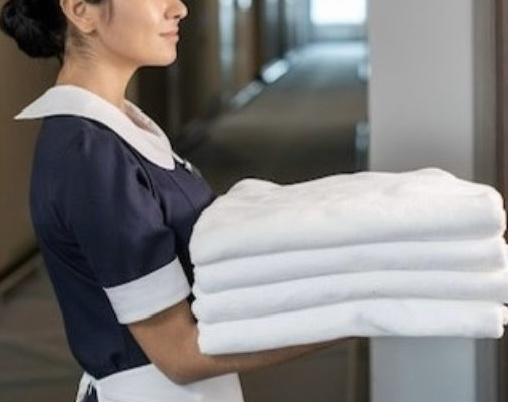

What Does Five-Star Service Really Mean in a Private Household?
What does five-star service really mean in a private household? For high-net-worth (HNW) and ultra-high-net-worth (UHNW) families, exceptional service is about far more than maintaining an immaculate home. It is the combination of discretion, anticipation, attention to detail, professional judgement and personalised care that allows a household to function smoothly while respecting the family’s privacy and lifestyle.
In a luxury hotel, five-star service is often associated with polished presentation, prompt assistance and consistently high standards. In a private residence, however, the expectations are different. Household staff work in an intimate environment where they may become familiar with family routines, personal preferences, valuable possessions and confidential information. Their responsibility is not simply to deliver a service but to maintain an environment in which the family feels comfortable, secure and understood.
A five-star private household experience should feel effortless to the family, even when considerable planning and coordination take place behind the scenes. Bedrooms are prepared according to individual preferences, wardrobes are carefully maintained, guest arrivals are anticipated, and household routines continue with minimal disruption. Staff understand when to offer assistance, when to ask questions and when the most professional response is to remain discreetly in the background.
For employers, understanding these standards is essential when recruiting a housekeeper, butler, house manager, nanny or other domestic professional. For candidates, recognising what exceptional private service involves can help them develop the skills and professional judgement required to succeed in luxury households.
This guide explores the meaning of five-star service in a private household, the standards that distinguish exceptional domestic staff, the importance of personalised service and the qualities employers should look for when recruiting experienced household professionals.
1. Five-Star Service in a Private Household Is Different from Hotel Service
Luxury hotels provide an important reference point for understanding exceptional service. They are designed to deliver high standards of cleanliness, presentation, hospitality and guest care. Nevertheless, a private household operates according to a different set of priorities.
A hotel serves guests within a structured commercial environment. A private household supports the daily life of a family, often over many years. Staff must therefore understand individual preferences, long-term routines and the boundaries that come with working in someone’s home.
Personalisation rather than standardisation
In a hotel, consistency is usually achieved through established procedures designed for a wide range of guests. In a private residence, consistency must be combined with personalisation.
One family may prefer a particular arrangement of cushions, while another may have precise requirements for bed linen, lighting, room temperature or wardrobe organisation. A principal may expect freshly prepared clothing each morning, while another prefers to select outfits independently.
A professional housekeeper learns these preferences and applies them consistently without requiring repeated instructions.
This does not mean assuming that every family member wants the same service. The best private household professionals recognise individual differences and adapt their approach accordingly.
Long-term responsibility
Hotel staff may prepare a room for a short stay. A private housekeeper may be responsible for maintaining the same bedrooms, furnishings, wardrobes and household systems for years.
This creates a different level of responsibility. Staff must understand how to preserve materials, monitor wear and tear, identify maintenance issues and maintain established standards over time.
For example, keeping a luxury wardrobe organised involves more than arranging clothing by colour. It may require an understanding of fabric care, seasonal rotation, appropriate storage, garment protection and the household’s preferred organisation system.
Privacy is central to the experience
Hotel guests expect a degree of privacy, but private household staff may have access to much more personal information than hospitality employees ordinarily encounter.
They may see family correspondence, travel arrangements, personal possessions and confidential documents. They may also work around sensitive conversations and private visitors.
Five-star service in a private home therefore requires professional discretion at every stage. Staff must understand that being trusted with access to a home does not give them permission to investigate, discuss or share information about the people who live there.
Service without unnecessary visibility
In a private household, excellent service often goes unnoticed because everything works as expected.
Fresh towels are available, the kitchen or utility area remains organised, clothing is prepared appropriately, and rooms are ready when needed. The family does not have to manage every detail because the household team understands its responsibilities.
This is one of the defining characteristics of exceptional private service: the work is visible in the quality of the environment, not necessarily in the presence of the person providing it.
2. Anticipating Needs Before They Become Requests
One of the most important characteristics of five-star service is the ability to anticipate reasonable needs.
A housekeeper who waits for every instruction may perform routine duties competently, but a highly experienced professional also recognises patterns, understands priorities and prepares for predictable requirements.
Anticipation does not mean making assumptions about personal preferences or taking control of decisions that belong to the family. It means using observation, experience and communication to prevent avoidable problems.
Learning household routines
Every family has its own rhythm.
Some households begin the day early, while others have changing schedules because of business commitments, school runs or international travel. Guests may arrive frequently, and family members may use different areas of the property at different times.
A professional housekeeper learns these patterns and plans work accordingly.
For example, if a family regularly uses a particular room for early morning exercise, the housekeeper can ensure that it is prepared before the usual time. If a guest is expected in the evening, the relevant bedroom and bathroom can be checked in advance.
This approach makes the household feel organised without creating unnecessary interruptions.
Recognising small details
Anticipation often depends on noticing details that other people overlook.
A housekeeper might recognise that a frequently used item is running low, that a guest bedroom needs additional preparation or that a garment requires specialist care before an important event.
They may also notice that a room is becoming cluttered, that a household appliance is not functioning properly or that a recurring task needs to be scheduled.
These observations become valuable when they are followed by appropriate action.
The housekeeper should understand which matters they can resolve independently and which require permission. Replenishing an agreed household supply may be routine, while purchasing an expensive replacement item may require approval.
Anticipation must respect boundaries
There is a difference between being proactive and becoming intrusive.
A housekeeper should not rearrange personal possessions, make assumptions about private plans or intervene in family matters simply because they believe it would be helpful.
For example, noticing that a principal has an important appointment may justify ensuring that clothing care is completed on schedule if this falls within the role. It does not automatically justify accessing private correspondence to investigate the appointment.
Professional anticipation is based on legitimate information, established routines and agreed responsibilities.
How employers can assess this quality
During recruitment, ask candidates to describe a time when they identified a need before receiving a direct instruction.
A strong answer should explain what they noticed, how they assessed the situation, what action they took and whether they sought approval where necessary.
Employers should look for sound judgement rather than dramatic examples. Small, practical improvements often demonstrate the strongest understanding of private household service.
3. Immaculate Housekeeping and Consistent Presentation
A well-maintained home is one of the foundations of five-star private service. However, immaculate housekeeping involves more than making rooms appear clean at a glance.
It requires a consistent standard across the property, including less visible areas, and an understanding of how cleanliness, organisation and presentation contribute to the family’s comfort.
A systematic approach to housekeeping
Experienced housekeepers use structured routines to ensure that important tasks are not overlooked.
These may include daily room refreshes, bathroom cleaning, bed making, dusting, floor care, laundry, replenishment and periodic deep cleaning.
The exact routine should reflect the property, the materials within it and the family’s preferences.
A large residence may require room-by-room schedules and coordination with other staff. A smaller home may need a simpler system. In both cases, the objective is the same: maintaining standards reliably without unnecessary disruption.
Presentation matters as much as cleanliness
A room may be hygienically clean but still look unfinished.
Bed linen may be uneven, towels may be folded inconsistently, cushions may be poorly arranged or personal items may be left in unsuitable places.
Five-star presentation involves checking the overall appearance of a room after the practical cleaning has been completed.
A professional housekeeper should consider the room as a whole. Lighting, ventilation, surface presentation, waste removal and the placement of everyday items can all influence the final impression.
The standard should be appropriate to the household rather than based on an inflexible idea of what every luxury home should look like.
Caring for delicate and valuable materials
Luxury properties may contain marble, natural stone, polished wood, fine textiles, designer furnishings and antique objects. These materials often require specialist care.
Using an unsuitable product or technique can cause damage, so staff must understand the limits of their knowledge and follow the appropriate instructions.
A responsible housekeeper should check manufacturer guidance, use approved products and seek specialist advice where necessary.
They should never assume that a product is safe simply because it has worked on another surface.
The same principle applies to designer clothing, leather goods, delicate upholstery and fine carpets. Proper care helps preserve the household’s possessions and prevents avoidable replacement costs.
Quality control should be routine
Exceptional housekeepers do not rely entirely on memory or wait for the employer to identify problems.
They inspect their work, follow established standards and correct small issues before considering a task complete.
This may involve a final bedroom check, confirming that laundry has been returned to the correct wardrobe or ensuring that cleaning equipment has been removed from view.
Consistency is particularly important when the family is travelling, entertaining or managing several properties. The household should not experience significant variations in quality simply because the schedule has become busier.
4. Discretion, Confidentiality and Professional Boundaries
Discretion is one of the defining qualities of a trusted private household professional.
A family may welcome staff into its home every day, but the employment relationship must remain professional. Trust depends on staff respecting the privacy of household members, visitors and other employees.
Confidentiality in everyday situations
Confidentiality is not limited to avoiding conversations with outsiders. It also involves knowing how to behave when encountering private information during routine duties.
A housekeeper may see documents left on a desk, hear a personal conversation or notice details about a family member’s schedule.
Unless information is relevant to their responsibilities, they should not investigate it or discuss it with others.
If a document appears to require attention, the housekeeper should follow the household’s instructions rather than read through it unnecessarily.
Social media and digital privacy
Digital communication has created additional responsibilities for domestic staff.
Photographs taken inside a residence, comments about a principal’s travel plans or casual posts about a household’s possessions can reveal information that the family never intended to make public.
Professional staff should follow the household’s rules concerning photographs, social media, messaging applications and personal devices.
They should not disclose addresses, access arrangements, travel details or other sensitive information without authorisation.
Respecting personal space
A private home contains personal spaces that require particular care.
Bedrooms, dressing rooms, offices and private bathrooms may contain sensitive belongings or documents. Staff should follow established procedures for entering, cleaning and organising these areas.
They should also understand that not every item should be moved simply because it appears out of place.
If an object has been left on a desk or a personal item is positioned in a particular way, the housekeeper should consider whether it needs to be moved at all.
Where instructions are unclear, asking is often the most professional response.
Professional boundaries protect both sides
A housekeeper should be friendly, respectful and approachable without becoming inappropriately involved in the family’s private affairs.
They should not use access to the household to seek personal favours, discuss confidential matters or make assumptions about their role in family decisions.
At the same time, employers should communicate expectations clearly and treat staff fairly.
Five-star service depends on mutual respect. Discretion should not be confused with accepting inappropriate treatment, and professionalism should be supported by reasonable working arrangements and clearly defined responsibilities.
Interview questions that reveal discretion
Employers can ask candidates how they have protected confidentiality in previous positions.
They might also present a scenario: a friend asks whether the family will be travelling abroad next week. How should the candidate respond?
A suitable answer would protect the family’s privacy and avoid confirming information that the friend is not authorised to know.
Candidates should be able to demonstrate an understanding of confidentiality through practical examples rather than simply describing themselves as discreet.
5. Personalised Service That Reflects the Family’s Lifestyle
Five-star service in a private household is not a universal checklist of luxury gestures. It is a personalised approach that reflects how the family lives.
The same arrangement may be perfect for one household and unsuitable for another. Professional staff must therefore learn the family’s preferences rather than impose their own ideas of luxury.
Understanding individual preferences
Family members may have different requirements for room temperature, bedding, clothing storage, laundry products and daily routines.
Some may prefer minimal interaction in the morning, while others appreciate a brief update about the household.
A professional housekeeper learns these preferences through clear instructions and observation.
They should record important working preferences where appropriate, especially when several staff members share responsibilities. This reduces the need for repeated questions and helps maintain consistency.
Supporting routines without creating friction
The purpose of personalised service is to make everyday life easier.
For example, a housekeeper may organise laundry around the family’s schedule so that essential garments are available when needed. Guest rooms can be prepared according to the expected arrival time, and frequently used household areas can be maintained without interrupting family activities.
The most effective service is often subtle. It removes practical concerns without demanding attention or recognition.
Understanding different expectations
Some families expect formal presentation and highly structured routines. Others prefer a relaxed atmosphere with fewer visible signs of service.
Neither approach is inherently superior. The housekeeper’s responsibility is to understand the agreed standard and deliver it consistently.
This is why communication during recruitment and induction is so important. Employers should explain their preferences, and candidates should feel comfortable asking reasonable questions before making assumptions.
Personalisation must remain professional
Knowing a family’s preferences does not mean becoming involved in private decisions outside the role.
A housekeeper may understand how a principal likes their wardrobe arranged, but this does not give them authority to discard clothing or purchase replacements without approval.
Similarly, they may know the family’s usual schedule but should not share that information with others.
Personalised service works best when familiarity is combined with sound judgement and respect for boundaries.
6. Communication That Keeps the Household Running Smoothly
A five-star private household depends on communication that is clear, timely and appropriate.
Even an exceptionally skilled housekeeper can create difficulties if they fail to report problems, misunderstand instructions or withhold important information.
Professional communication allows the family and household team to make decisions before small issues become larger disruptions.
Reporting problems promptly
Suppose a housekeeper notices a leak, a damaged garment or a broken appliance.
The appropriate response is to assess the situation within the limits of their role, follow any relevant safety procedures and report the issue to the correct person.
They should provide accurate information without exaggerating the problem or attempting an unfamiliar repair without permission.
Timely reporting can prevent damage, reduce costs and protect the household’s routines.
Communicating unfinished tasks
Household work does not always proceed exactly as planned. A delayed delivery, unexpected visitor or urgent request may affect the day’s schedule.
A professional housekeeper should communicate when a task cannot be completed as expected, explain the reason and clarify what needs to happen next.
Silence can create unnecessary confusion, particularly when several people depend on the same information.
Working with other household staff
Larger residences may employ a house manager, butler, chef, nanny, driver, gardener and maintenance professionals.
Each role has different responsibilities, but their work often overlaps in practical ways.
For example, guest-room preparation may depend on maintenance work being completed, while laundry arrangements may need to accommodate travel or event schedules.
Good communication helps the team coordinate these responsibilities without duplication or conflict.
Staff should understand who is responsible for making decisions and where to direct questions.
Receiving feedback constructively
Every household has its own standards, and a new employee will need time to learn them.
A professional housekeeper should listen to feedback, clarify instructions and make reasonable adjustments.
If a particular method of folding linen or arranging a room differs from their previous experience, they should follow the household’s agreed preferences.
Employers should also provide feedback respectfully and consistently. Contradictory instructions and unexplained changes can undermine even a capable employee’s performance.
Five-star service is supported by a working environment in which expectations are clear and communication is constructive.
7. Time Management, Organisation and Reliability
Exceptional service depends on the ability to complete tasks at the right time without allowing quality to deteriorate.
A private household may have a fixed schedule for certain activities and considerable flexibility elsewhere. The housekeeper must understand which responsibilities are time-sensitive and which can be rearranged.
Prioritising the workload
A professional housekeeper should be able to organise daily and periodic duties according to the household’s needs.
This may involve planning room cleaning, laundry, linen changes, wardrobe care, replenishment and guest preparation.
When priorities change, the housekeeper should assess the impact and communicate any necessary adjustments.
Simply working faster is not always the answer. Rushing can lead to mistakes, damage or incomplete tasks.
Reliable attendance and follow-through
Reliability includes punctuality, consistency and keeping agreed commitments.
If a housekeeper is unable to attend work or expects a significant delay, they should communicate according to the agreed procedure.
Employers should assess reliability fairly and consider the overall evidence rather than draw conclusions from one isolated event.
Systems that support consistency
Checklists, schedules and household notes can help prevent tasks from being overlooked.
A housekeeper may use a daily checklist for routine cleaning, a separate schedule for periodic maintenance and an inventory system for agreed household supplies.
The system should be practical and proportionate. Excessive paperwork can create unnecessary work, while relying entirely on memory may be unreliable in a large residence.
The aim is to make the household easier to manage, not to introduce complexity for its own sake.
Reliability during busy periods
Five-star standards should remain consistent when the household is preparing for guests, hosting an event or getting ready for travel.
This requires forward planning, realistic prioritisation and communication with other staff members.
A housekeeper should recognise when additional time or support is needed rather than quietly allowing standards to decline.
Employers should also ensure that the workload is reasonable and that expectations reflect the agreed hours and responsibilities.
8. Teamwork and Coordination in a Luxury Household
In larger private residences, five-star service is rarely the responsibility of one person alone.
The housekeeper may be part of a team that includes a house manager, butler, chef, nanny, driver, gardener and other specialists. Each employee contributes to the family’s overall experience.
Understanding the wider household structure
A professional housekeeper should know their own responsibilities and understand how they connect with those of other staff members.
They should not assume that every task belongs to them, nor should they leave relevant issues unreported because another employee is responsible for a different part of the household.
Clear reporting lines help avoid confusion.
For example, the housekeeper may identify a maintenance issue, while the house manager coordinates the contractor. The housekeeper’s role is to report the problem accurately and follow any instructions relating to access or room preparation.
Cooperation without duplication
When several employees share a property, clear communication prevents tasks from being repeated or overlooked.
The household may use schedules, handover notes or brief team meetings to coordinate priorities.
A professional housekeeper should communicate relevant information while avoiding unnecessary discussion of confidential matters.
The same principles apply when a household employs staff across several residences.
Respect and professional conduct
Good teamwork requires courtesy, accountability and a willingness to cooperate.
Staff should avoid creating conflict over routine responsibilities or withholding information that colleagues need to perform their duties.
At the same time, each employee should respect role boundaries and refer decisions to the appropriate manager.
A household operates most effectively when every team member understands their contribution and the standards expected of them.
9. Five-Star Service During Guest Preparation and Entertaining
Guest preparation provides a useful example of how the different elements of private household service work together.
Preparing a residence for visitors involves more than cleaning a spare bedroom. It may require coordinating linen, towels, guest amenities, room presentation and the timing of other household tasks.
Preparing guest accommodation
The housekeeper should follow the household’s agreed checklist and consider the expected arrival time.
Depending on the residence, preparation may include:
- Ensuring the bedroom and bathroom are thoroughly cleaned.
- Preparing the bed according to the family’s preferred standard.
- Checking that towels and essential supplies are available.
- Ensuring that lighting and basic room facilities work correctly.
- Removing cleaning equipment and unnecessary items.
- Confirming that the room is comfortable and ready for use.
- Reporting maintenance issues before the guest arrives.
The exact requirements should reflect the family’s preferences and the facilities available.
Anticipating reasonable guest needs
A housekeeper may be asked to prepare additional bedding, arrange guest towels or ensure that a particular room is ready for an early arrival.
Anticipation is useful when based on confirmed information and established routines.
However, staff should avoid making assumptions about guests’ personal preferences or handling belongings without permission.
If a request is unclear, a brief question is preferable to an avoidable mistake.
Maintaining standards during entertaining
When a family hosts guests, household staff may need to maintain common areas while minimising interruptions.
This requires timing, discretion and coordination with other employees.
A housekeeper should know which rooms need attention, which areas are in use and when it is appropriate to enter.
If the household has a butler or event coordinator, responsibilities should be agreed in advance to prevent overlap.
The goal is to support the event while allowing the family and guests to enjoy their time without unnecessary disruption.
10. Preparing a Private Household for Travel
Travel arrangements often reveal the value of experienced household staff.
Before a family departs, the housekeeper may be responsible for preparing clothing, organising laundry, checking wardrobes, coordinating packing requirements or ensuring that the residence is ready for the family’s return.
These responsibilities vary considerably between households and should be agreed in advance.
Organising clothing and personal items
If packing is part of the role, the housekeeper should follow the family’s preferences and any agreed packing list.
Clothing should be handled according to its care requirements, with delicate garments protected appropriately. Shoes, accessories and other items should be packed in a way that reduces the risk of damage.
The housekeeper should confirm which items are required rather than make assumptions about personal choices.
Coordinating with the household team
Travel preparation may involve the house manager, personal assistant, nanny or other staff members.
Clear communication is essential, particularly when departure times change or several family members have different requirements.
The housekeeper should understand their own responsibilities and report any outstanding tasks before departure.
Preparing the property for an absence
Depending on the household’s instructions, the housekeeper may need to ensure that laundry is completed, perishable items are handled appropriately and rooms are left in the agreed condition.
Some homes may require additional coordination with maintenance or security professionals. These arrangements should follow the household’s established procedures.
Preparing for the family’s return
Five-star service may also involve preparing the home before the family returns.
This could include refreshing bedrooms, ensuring that essential supplies are available and checking that the property is comfortable and ready for use.
The objective is to reduce the practical work the family must manage after travelling.
11. How Five-Star Service Differs Between Household Roles
The meaning of five-star service depends partly on the position being performed. A housekeeper, butler, house manager and nanny may all contribute to a luxury household, but their responsibilities are not interchangeable.
The private housekeeper
A private housekeeper focuses on cleanliness, organisation, laundry, linen care and the presentation of the residence.
Depending on the role, responsibilities may also include wardrobe maintenance, guest-room preparation, replenishment and coordination with other staff.
A five-star housekeeper delivers consistent standards while protecting the family’s possessions and respecting privacy.
The butler
A butler may be responsible for formal service, entertaining, table presentation, beverage service, guest assistance and coordination of particular hospitality requirements.
The exact scope varies between households.
A five-star butler combines polished service with discretion and an understanding of the family’s preferences.
The house manager
A house manager typically focuses on the organisation and smooth operation of the household.
Depending on the position, this may include staff coordination, scheduling, contractor management, household inventories, maintenance oversight and communication with the employer.
The house manager helps ensure that the household’s systems work together effectively.
The nanny
A nanny’s primary responsibility is the care and development of children, including their safety, routines and age-appropriate activities.
While a nanny may support certain child-related household routines, the role should not be confused with that of a housekeeper.
Employers should define duties clearly to ensure that childcare responsibilities are not compromised by unrelated household demands.
For further information, read Fully Staffed’s guide on how to choose the right nanny.
Why role clarity improves service
When responsibilities are clearly defined, employees can focus on their areas of expertise and cooperate more effectively.
Unclear job descriptions may result in duplicated work, conflicting instructions or unrealistic expectations.
A household should recruit according to its actual needs rather than assume that one employee can perform several specialist roles to the highest standard without sufficient time, experience or support.
12. How Employers Can Recognise Five-Star Service During Recruitment
For employers, the challenge is identifying candidates who genuinely understand luxury private service rather than simply using the language of hospitality.
A candidate may describe themselves as meticulous, discreet and proactive. Recruitment should establish whether their experience and behaviour support those claims.
Assess practical experience
Ask candidates about the types of properties they have worked in, their responsibilities and the standards they were expected to maintain.
Explore their experience with laundry, delicate materials, guest preparation, household routines and working independently.
The objective is not to favour a particular job title or employer. It is to understand whether the candidate’s skills are relevant to the position being offered.
Use structured interview questions
Useful questions include:
- What does five-star service mean to you in a private household?
- How do you learn and remember a family’s preferences?
- How do you protect confidentiality while working in someone’s home?
- Tell us about a time you anticipated a need before being asked.
- How do you respond when household priorities change?
- What would you do if you were unsure how to care for a valuable item?
- How do you maintain consistent standards when working independently?
- Describe a time you received feedback and changed your approach.
Strong answers should include specific examples and explain the candidate’s reasoning.
Employers should be cautious of answers that focus exclusively on speed, obedience or impressive terminology without demonstrating sound judgement.
Verify references
References can help confirm previous responsibilities, reliability, discretion and the candidate’s approach to professional service.
Where appropriate and with consent, employers should verify employment history and ask role-relevant questions.
Reference checks should be conducted respectfully, with proper attention to confidentiality and applicable requirements.
Consider practical assessments
A practical assessment may help evaluate bed making, laundry knowledge, room presentation or task organisation.
It should be appropriate to the role, explained clearly and conducted under fair conditions.
Employers should not expect candidates to demonstrate specialist skills that were never included in the job description.
Look beyond prestige
Experience in a prestigious property may be valuable, but the name of a former employer does not guarantee suitability.
The most relevant questions concern the candidate’s actual duties, standards, judgement and professional behaviour.
A housekeeper who has worked in a smaller residence with considerable responsibility may be more suitable for a particular role than someone who has worked in a large property with limited independence.
Recruitment should focus on evidence, not assumptions.
13. Can Five-Star Service Be Taught?
Many aspects of five-star service can be developed through training, experience and clear household procedures.
Technical skills such as specialist laundry care, room presentation, inventory management and the use of appropriate cleaning products can often be improved through structured learning.
However, training is most effective when the employee also demonstrates the right professional attitude.
Skills that can be developed
Depending on the candidate’s experience, training may include:
- Care of delicate fabrics and luxury materials.
- Specialist cleaning methods and product selection.
- Wardrobe organisation and seasonal storage.
- Guest-room preparation and presentation.
- Household inventory and replenishment systems.
- Communication and reporting procedures.
- Use of household checklists and schedules.
- Coordination with other domestic staff.
The training should reflect the property and the actual responsibilities of the role.
Professional qualities that must be demonstrated
Employers should also look for honesty, discretion, reliability, accountability and a willingness to learn.
A candidate who recognises the limits of their knowledge and follows instructions may develop specialist expertise over time.
By contrast, someone who repeatedly ignores procedures, conceals mistakes or dismisses reasonable feedback may struggle regardless of how much training is provided.
A structured induction supports success
Even experienced staff need time to understand a new household.
An induction should cover the property’s layout, approved products, equipment, storage systems, family preferences, security procedures and reporting lines.
Employers should explain which tasks can be completed independently and which require permission.
Regular, constructive feedback helps the employee understand expectations and improve their performance.
Five-star service is not achieved by leaving staff to guess what the family wants. It is built through clear standards, suitable recruitment and a professional working relationship.
14. Live-In and Live-Out Housekeepers: Maintaining the Same Professional Standards
Five-star service can be delivered by both live-in and live-out housekeepers. The most appropriate arrangement depends on the household’s needs, the role’s working hours and the practical requirements of the property.
Live-out housekeeping
A live-out housekeeper travels to and from the residence and works according to an agreed schedule.
This arrangement may suit households that require consistent daytime housekeeping, laundry, organisation and property maintenance without providing accommodation.
Employers should ensure that the schedule allows enough time to complete the required duties to the expected standard.
Explore the live-out housekeeper London page for more information.
Live-in housekeeping
A live-in housekeeper resides in accommodation provided as part of the employment arrangement, where applicable.
This can be useful for households with particular scheduling requirements or a need for a staff member to be based at the property.
However, live-in employment still requires clear working hours, appropriate privacy, rest periods and agreed responsibilities.
Living on the premises should not be confused with unlimited availability.
Learn more about live-in housekeeper London.
Matching the arrangement to the household
Employers should consider the property’s size, the workload, the family’s schedule and the level of service required.
A live-in arrangement may be appropriate in one household, while a live-out position may be more suitable in another.
The decision should be based on the role’s requirements and the candidate’s suitability, rather than assumptions about which arrangement automatically delivers a higher standard.
For households that also require childcare, Fully Staffed provides information about a live-in nanny in London. The responsibilities of each role should be defined clearly so that both housekeeping and childcare standards can be maintained.
15. Common Misunderstandings About Five-Star Private Service
Understanding what five-star service means also requires recognising what it does not mean.
It does not mean doing everything without instructions
A professional housekeeper should learn household preferences and use initiative, but they must not assume that every decision belongs to them.
Valuable items, private belongings and changes to established systems may require approval.
It does not mean being constantly visible
Some employers value formal interaction, while others prefer minimal interruption.
The appropriate level of visibility depends on the family’s preferences and the employee’s role.
Professional service involves knowing when to assist and when to give the family space.
It does not mean working without boundaries
A high standard of service should be delivered within clear employment arrangements.
Reasonable working hours, rest periods, agreed duties and respectful treatment are important for a sustainable working relationship.
It does not mean luxury gestures are always necessary
Five-star service is not defined by elaborate presentation or expensive products.
In many households, the most valuable service is practical, quiet and consistent: rooms are ready, clothing is cared for, supplies are available and problems are addressed promptly.
It does not mean every family wants the same thing
A successful housekeeper adapts to the household rather than applying one rigid model of luxury.
Understanding the family’s actual preferences is more important than following generic ideas about how an expensive home should operate.
16. Building a Household Culture Around Exceptional Service
Five-star service is easier to maintain when it is supported by a clear household culture.
Employers should communicate their expectations, provide suitable equipment and ensure that staff understand the systems they are expected to follow.
Clear standards and responsibilities
Each employee should understand their duties, reporting line and the limits of their authority.
This reduces uncertainty and allows staff to take initiative where appropriate.
Written procedures can be useful for recurring tasks, specialist materials, guest preparation and property-specific requirements.
Appropriate equipment and resources
Staff cannot consistently deliver excellent results without suitable products, equipment and enough time to complete their responsibilities.
Employers should ensure that the housekeeper has access to approved cleaning products, laundry equipment and any necessary protective materials.
If a task requires specialist knowledge or equipment, the household should arrange appropriate support rather than expect the employee to improvise.
Respectful management
A professional working environment encourages employees to report mistakes, ask questions and raise concerns before problems escalate.
Clear feedback helps staff improve, while reasonable expectations support long-term reliability.
Employers should also recognise that household needs can change. When responsibilities expand significantly, the job description, workload and working arrangements may need to be reviewed.
Consistency across the team
Where several employees are involved, shared procedures help maintain a consistent standard.
A house manager may coordinate schedules, while individual staff members remain responsible for their assigned duties.
The household should avoid relying on informal assumptions when clear communication would prevent confusion.
Exceptional service is not simply the result of one outstanding employee. It is often the outcome of a well-organised household in which each person understands their responsibilities.
17. Why Specialist Domestic Staff Recruitment Matters
Finding a housekeeper who can deliver five-star service requires a careful assessment of experience, professional conduct and suitability.
A general job advertisement may attract candidates with very different backgrounds. Some may have excellent cleaning skills but limited experience with private households. Others may have worked in luxury environments but lack the independence or communication skills required by a particular employer.
A focused recruitment process helps identify the most relevant candidates.
Defining the employer’s requirements
The first step is to establish what the household actually needs.
This may include the size of the property, the expected housekeeping standard, laundry and wardrobe responsibilities, guest preparation, the working schedule and any specialist requirements.
Employers should distinguish essential skills from desirable experience.
For example, a position requiring extensive care of designer clothing may need a different candidate profile from one focused primarily on daily housekeeping and general organisation.
Assessing candidates against the brief
Once the requirements are clear, candidates can be evaluated according to relevant experience, references, interview responses and other appropriate checks.
The strongest match is not necessarily the person with the longest CV. It is the person whose abilities and working style align with the household’s actual needs.
Supporting both employers and candidates
A clear recruitment process benefits candidates as well as employers.
Applicants need an accurate understanding of the duties, working hours, living arrangements and expectations of the role.
This allows them to make informed decisions and helps reduce misunderstandings after employment begins.
Candidates interested in domestic staffing opportunities can visit Apply for Domestic Staff Jobs to learn more about applying for suitable positions.
18. How Fully Staffed Supports Private Households
Fully Staffed recruits experienced domestic and household staff for private, HNW and UHNW families in London and internationally.
The agency’s role is to help employers identify candidates whose experience and professional qualities match the needs of the household.
A successful placement begins with understanding the position. Different families require different combinations of housekeeping, laundry care, organisation, guest preparation, discretion and independent working.
By defining these requirements clearly, employers can focus on candidates with relevant experience and assess their suitability more effectively.
Recruitment for individual household requirements
Some families need an experienced housekeeper to maintain a single London residence. Others may require staff who can support a larger property, coordinate with a household team or adapt to a more complex schedule.
The appropriate recruitment approach depends on the specific role.
Employers can explore Fully Staffed’s services and hire staff pages for further information.
Learn more about Fully Staffed
Visit the Fully Staffed homepage to explore the agency’s work, or read About Fully Staffed to learn more about the business.
If you are seeking a housekeeper or other domestic professional, you can contact the domestic staff agency to discuss your household’s requirements.
For additional housekeeping information, you may also wish to visit Housekeeper London – Fully Staffed. Please verify the exact URL before publication, as the character in the current address may differ from a standard Latin letter.
Conclusion: Five-Star Service Is the Art of Making Life Easier
What does five-star service really mean in a private household? It means delivering consistently high standards while understanding that every home, family and working relationship is different.
Exceptional service combines immaculate housekeeping, careful treatment of valuable possessions, discretion, personalised routines, thoughtful anticipation and reliable communication. It also requires professional boundaries, independent judgement and the ability to work constructively with other household staff.
The best housekeepers do not simply complete a list of tasks. They understand the purpose behind their responsibilities and recognise how their work contributes to the family’s comfort, privacy and daily routine.
For employers, achieving this standard begins with a clear job description and a careful recruitment process. Candidates should be assessed on practical ability, relevant experience, professional conduct and their capacity to adapt to the household’s preferences.
Training and a thorough induction can help experienced staff learn the systems of a new home, but long-term success also depends on mutual respect, realistic expectations and clear communication.
Ultimately, five-star service is not about creating an impression of luxury. It is about providing a dependable, thoughtful and highly professional service that allows a private household to operate smoothly.
Fully Staffed supports private families seeking experienced domestic staff in London and internationally. To discuss your requirements, visit Contact Fully Staffed.