How to Prepare a Luxury Home for VIP Guests: A Professional Housekeeping Checklist
Preparing a luxury home for VIP guests requires far more than ensuring that rooms are clean and beds are made. In a prestigious private residence, every detail contributes to the guest experience, from the first impression at the entrance to the quality of the bed linen, the arrangement of fresh flowers, the presentation of bathrooms and the discreet availability of household staff.
For high-net-worth (HNW) and ultra-high-net-worth (UHNW) families, welcoming distinguished guests often involves carefully coordinated housekeeping, laundry, wardrobe preparation, guest amenities, property maintenance and personalised service. The residence must feel immaculate, comfortable and welcoming without appearing overly formal or disrupting the privacy of the family or its visitors.
Whether preparing a London townhouse, a country estate, a luxury apartment or an international holiday residence, professional household staff play an essential role in achieving these standards. Experienced housekeepers understand how to anticipate guests’ needs, organise complex preparations and maintain exceptional standards of cleanliness and presentation under time pressure.
At Fully Staffed, we understand the importance of recruiting experienced domestic staff who can meet the expectations of private households. Our agency recruits professional household staff for private, HNW and UHNW families in London and internationally.
This comprehensive guide explains how to prepare a luxury home for VIP guests, with a professional housekeeping checklist covering every stage of preparation, from advance planning and deep cleaning to guest bedrooms, bathrooms, fine linen, household coordination and the final inspection.
Why Preparing a Luxury Home for VIP Guests Requires a Professional Approach
In a luxury private residence, the quality of preparation is measured by more than visible cleanliness. Guests should arrive to find an environment in which everything feels considered, comfortable and effortless.
A professionally prepared home reflects the household’s standards, hospitality and attention to detail. It also allows the principal and their guests to enjoy their time together without being distracted by unfinished tasks, missing essentials or avoidable maintenance problems.
Several factors make VIP guest preparation particularly demanding.
Exceptional Standards of Cleanliness and Presentation
Luxury homes frequently contain valuable furniture, delicate fabrics, designer furnishings, natural stone, antique objects, artwork and specialist finishes. These materials require appropriate cleaning methods and careful handling.
Professional housekeepers understand that cleaning a luxury residence is not simply a matter of using stronger products or spending more time on each room. It requires knowledge of surfaces, materials and the correct techniques for preserving their appearance.
A marble bathroom, for example, requires different care from a stainless-steel kitchen or a bedroom containing antique wooden furniture. Incorrect cleaning products can cause damage that is expensive or impossible to reverse.
Personalised Guest Expectations
VIP guests may have particular preferences concerning room temperature, pillows, toiletries, refreshments, dietary requirements and daily routines.
Some guests may expect a highly personalised experience, while others may value complete privacy and minimal interaction. Understanding these preferences in advance enables the household team to provide an appropriate level of service.
Where possible, preferences should be confirmed through the principal, personal assistant or household manager rather than assumed.
Discretion and Confidentiality
Private households often receive business associates, international visitors, family members and distinguished individuals who value their privacy.
Household staff must understand the importance of confidentiality, secure handling of personal belongings, appropriate communication and professional boundaries.
Guest information, travel arrangements, personal conversations and photographs of the residence must be treated with discretion. Staff should never discuss private household matters with unauthorised individuals or share information about guests on social media.
Coordination Across the Household
Preparing a residence for important visitors may involve several members of staff, including housekeepers, chefs, butlers, chauffeurs, nannies, household managers and maintenance personnel.
Clear responsibilities and realistic deadlines prevent duplicated work and overlooked details.
For larger residences, an experienced House Manager or Head Housekeeper can coordinate the preparation schedule, inspect completed rooms and ensure that the household is ready before the guests arrive.
Step 1: Create a Professional VIP Guest Preparation Plan
The most effective preparations begin well before the arrival date. Rushing through cleaning and guest arrangements at the last minute increases the risk of mistakes and places unnecessary pressure on household staff.
Ideally, preparations should begin as soon as the visit is confirmed, with the schedule adjusted according to the size of the property, the number of guests and the complexity of their requirements.
Confirm the Guest Arrangements
Start by establishing the essential information.
The preparation plan should include:
- The guests’ arrival and departure dates.
- The expected arrival time and method of transport.
- The number of guests and bedrooms required.
- Whether children, elderly guests or additional accompanying staff will be staying.
- Any dietary requirements or allergies relevant to hospitality arrangements.
- Preferred room temperatures, pillows, bedding and toiletries, where known.
- Any accessibility requirements.
- Whether guests will entertain visitors or host meetings during their stay.
- The expected level of daily housekeeping and laundry service.
- Any special requests communicated by the principal or personal assistant.
This information allows the household team to prioritise tasks and prepare the appropriate rooms and facilities.
It is important to distinguish between confirmed requirements and assumptions. Staff should not purchase expensive amenities, rearrange personal belongings or make significant changes to guest rooms without appropriate authorisation.
Inspect the Property Before Cleaning Begins
Conduct an initial walkthrough of the residence to identify maintenance issues, areas requiring additional attention and supplies that need replenishing.
Check guest bedrooms, bathrooms, reception rooms, dining areas, kitchens, hallways, entrances and outdoor spaces that guests are likely to use.
Look for marks on walls, damaged upholstery, loose handles, faulty lighting, dripping taps, unpleasant odours, worn towels and other details that may affect the guest experience.
Any maintenance issues should be reported promptly. Repairs requiring specialist attention should not be left until the final hours before arrival.
Establish a Room-by-Room Schedule
Divide the preparation into manageable stages.
A typical schedule might include deep cleaning several days before arrival, laundering and pressing linen, completing maintenance, arranging flowers and amenities, and conducting a final inspection on the day of arrival.
Assign each task to a specific member of staff and establish a clear deadline.
For larger homes, a written checklist or household management system can help track progress across multiple rooms and staff members.
The objective is to create a calm, organised process in which every task has an owner and nothing important depends on memory alone.
Step 2: Prepare the Entrance and Reception Areas
The entrance establishes the first impression of the residence. Guests should arrive to find the property clean, well maintained, appropriately lit and ready to welcome them.
In a luxury home, the entrance should feel inviting rather than crowded or excessively decorated.
Professional Entrance and Hallway Checklist
- Clean and polish appropriate entrance flooring.
- Remove dust from console tables, decorative objects and mirrors.
- Clean entrance doors, handles and accessible glass surfaces.
- Check that lighting is functioning correctly.
- Ensure that entrance mats are clean and properly positioned.
- Remove unnecessary items, shoes, packaging and cleaning equipment.
- Arrange flowers or decorative elements where appropriate.
- Check for unpleasant smells and investigate their source.
- Ensure that coats, umbrellas and guest belongings can be accommodated.
- Confirm that the entrance is safe and free from obstructions.
Special attention should be paid to flooring materials such as natural stone, polished wood and delicate rugs. Cleaning products must be appropriate for the material, and wet surfaces should never be left slippery.
Create a Welcoming Atmosphere
Lighting, temperature, scent and presentation all contribute to the atmosphere of a luxury residence.
Rooms should feel comfortable and naturally inviting. Artificial fragrances should be used cautiously, as strong scents may be unpleasant for some guests or trigger sensitivities.
Fresh flowers can enhance an entrance or reception room, but arrangements should be suitable for the space and should not obstruct movement or conversation.
The aim is to create a sense of readiness without making the property feel staged or impersonal.
Step 3: Deep Clean Guest Bedrooms to an Exceptional Standard
The guest bedroom is one of the most important areas to prepare. It should provide a restful, hygienic and comfortable environment in which visitors can settle in immediately.
Even a beautifully furnished bedroom can feel unprepared if there is dust on bedside tables, a mark on the mirror, an unpleasant odour or poorly presented bedding.
Guest Bedroom Housekeeping Checklist
Surfaces and furniture
- Dust bedside tables, dressers, desks, shelves and decorative objects.
- Clean mirrors and glass surfaces without leaving streaks.
- Wipe suitable furniture surfaces using the correct products.
- Check lamps, switches, handles and other frequently touched areas.
- Remove dust from skirting boards, accessible fixtures and furniture edges.
- Check upholstered furniture for marks, crumbs or visible wear.
- Ensure drawers and wardrobes are clean and ready for use.
Floors and textiles
- Vacuum carpets thoroughly, including accessible edges.
- Clean hard flooring according to the manufacturer’s guidance.
- Remove visible marks from suitable upholstery.
- Check curtains and blinds for dust or obvious stains.
- Ensure that decorative cushions and throws are clean and neatly arranged.
- Remove any previous guest’s belongings or personal items that should not remain in the room.
Lighting and comfort
- Test bedside lamps and main lighting.
- Check that curtains and blinds operate correctly.
- Confirm that heating or cooling controls work.
- Ensure that the room is appropriately ventilated.
- Check that bedside tables are practical and uncluttered.
- Provide accessible charging points where available.
- Confirm that doors, windows and wardrobe fittings operate properly.
Every bedroom should receive a final visual inspection after cleaning. This should take place once all other preparations, including linen changes and amenity placement, have been completed.
Prepare the Bed Like a Professional Housekeeper
The bed is usually the visual centrepiece of a guest bedroom. Crisp linen, smooth surfaces and carefully arranged pillows contribute significantly to the impression of quality.
Begin by inspecting the mattress protector, mattress and pillows. Replace any items that are stained, damaged or unsuitable for use.
Use freshly laundered bed linen that is appropriate for the season and the guest’s known preferences. Sheets should be clean, dry, well pressed where appropriate and free from marks or lingering laundry-product odours.
When making the bed:
- Ensure that the fitted sheet is smooth and secure.
- Position the top sheet and duvet evenly.
- Arrange pillows symmetrically and according to the household’s preferred style.
- Remove visible creases where practical.
- Position decorative cushions and throws neatly without overcrowding the bed.
- Check that the bed is accessible and that bedside essentials remain within reach.
High-quality linen requires careful laundering, drying and storage. Fine cotton, linen and other delicate fabrics may require different washing temperatures, pressing techniques and storage conditions.
Professional housekeepers should always follow care labels and household instructions rather than applying one method to every textile.
Stock the Wardrobe and Guest Storage
A guest bedroom should offer sufficient space for visitors to unpack and settle in.
Check that wardrobes, drawers and luggage areas are clean, uncluttered and functional.
Provide suitable hangers, including appropriate options for delicate clothing where available. Ensure that drawers open smoothly and that there is space for folded garments.
If the household provides dressing gowns, slippers, shoe-care items or luggage stands, inspect these before arrival and ensure that they are clean and correctly positioned.
Guests should not have to move the family’s personal belongings to make room for their own items.
Step 4: Prepare Guest Bathrooms to Luxury Standards
Bathrooms require particularly careful attention because cleanliness, hygiene and the availability of essential amenities are immediately noticeable.
A luxury bathroom should be spotless, dry, well stocked and free from unpleasant odours. Taps, mirrors, shower screens and other visible surfaces should be clean, while towels and toiletries should be arranged neatly.
Complete Bathroom Cleaning Checklist
- Clean and disinfect the toilet using appropriate products.
- Clean washbasins and taps, removing visible watermarks.
- Clean mirrors and glass surfaces.
- Clean showers, baths and shower screens.
- Inspect grout and sealant for visible dirt or deterioration.
- Remove hair from drains and accessible surfaces.
- Clean bathroom counters and suitable storage areas.
- Polish appropriate metal fittings without damaging their finishes.
- Clean floors and ensure that they are completely dry.
- Empty bins and fit fresh liners.
- Check ventilation and investigate unusual odours.
- Inspect dispensers and other guest-facing fittings.
- Confirm that hot and cold water are functioning correctly.
Different bathroom materials require different cleaning methods. Natural stone, particularly marble, can be damaged by acidic products, while certain metallic finishes require non-abrasive cleaners.
Household staff should follow the manufacturer’s instructions and the property’s established cleaning procedures.
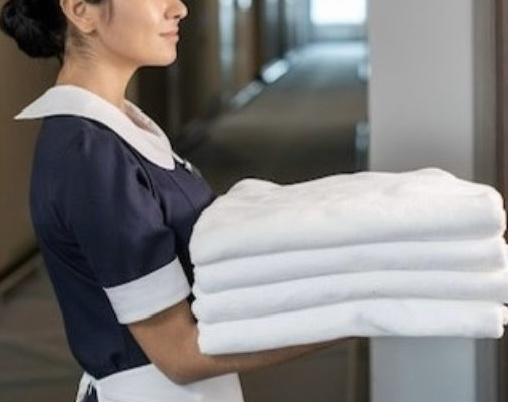
Arrange Towels and Bath Linen
Provide a complete set of fresh towels appropriate to the guest’s needs and the household’s standards.
This may include bath towels, hand towels, face cloths and bath mats. Additional towels may be appropriate for longer stays or guests who will use swimming pools, gyms or outdoor facilities.
Towels should be completely dry, clean, free from stains and folded consistently.
Check that towel rails are clean and that used linen from previous stays has been removed.
Stock Toiletries and Bathroom Essentials
The precise selection of toiletries should reflect the household’s preferences and the guests’ known requirements.
Depending on the residence, appropriate amenities may include:
- Hand wash and hand lotion.
- Shampoo and conditioner.
- Body wash or soap.
- Body lotion.
- Tissues and toilet paper.
- Hairdryer and suitable electrical accessories.
- Shower caps or other customary amenities.
- A clean bathrobe and slippers, where provided.
Check expiry dates where relevant, replace empty containers and ensure that packaging is clean.
If guests have specific allergies or product preferences, these should be confirmed before selecting alternatives. Staff should not assume that expensive or heavily fragranced products are suitable for everyone.
Step 5: Prepare Guest Amenities and Personal Touches
Thoughtful amenities can make a luxury residence feel exceptionally welcoming. However, successful hospitality depends on relevance and restraint rather than simply providing a large number of items.
The best arrangements anticipate genuine needs while respecting personal preferences and avoiding unnecessary clutter.
Welcome Amenities Checklist
Depending on the household’s style and the guests’ requirements, consider preparing:
- Still or sparkling water.
- A selection of tea and coffee.
- Suitable glassware and cups.
- Fresh fruit or other approved refreshments.
- A small welcome note, if appropriate.
- Local information or essential household guidance.
- Charging facilities where available.
- A practical place for luggage and personal belongings.
- Additional blankets or pillows where requested.
Food and refreshments should be handled hygienically, and any known dietary requirements must be taken into account.
Fresh flowers, books or other decorative touches may be suitable, but these should complement the room rather than compete with its design.
Check Every Item Before Placement
Inspect welcome amenities individually before arranging them.
Glassware should be clean and free from fingerprints. Bottles should be unopened where appropriate, and food should be fresh and correctly stored.
Avoid placing refreshments in locations where they could damage delicate furniture or fabrics.
If a welcome note is prepared, check the guest’s name and spelling carefully. Small mistakes can undermine an otherwise excellent presentation.
Step 6: Prepare Reception Rooms and Shared Living Areas
VIP guests may spend considerable time in reception rooms, drawing rooms, libraries, lounges and other shared spaces.
These rooms should be clean, comfortable and ready for their intended use, whether the guests will be relaxing privately, meeting the family or attending a formal gathering.
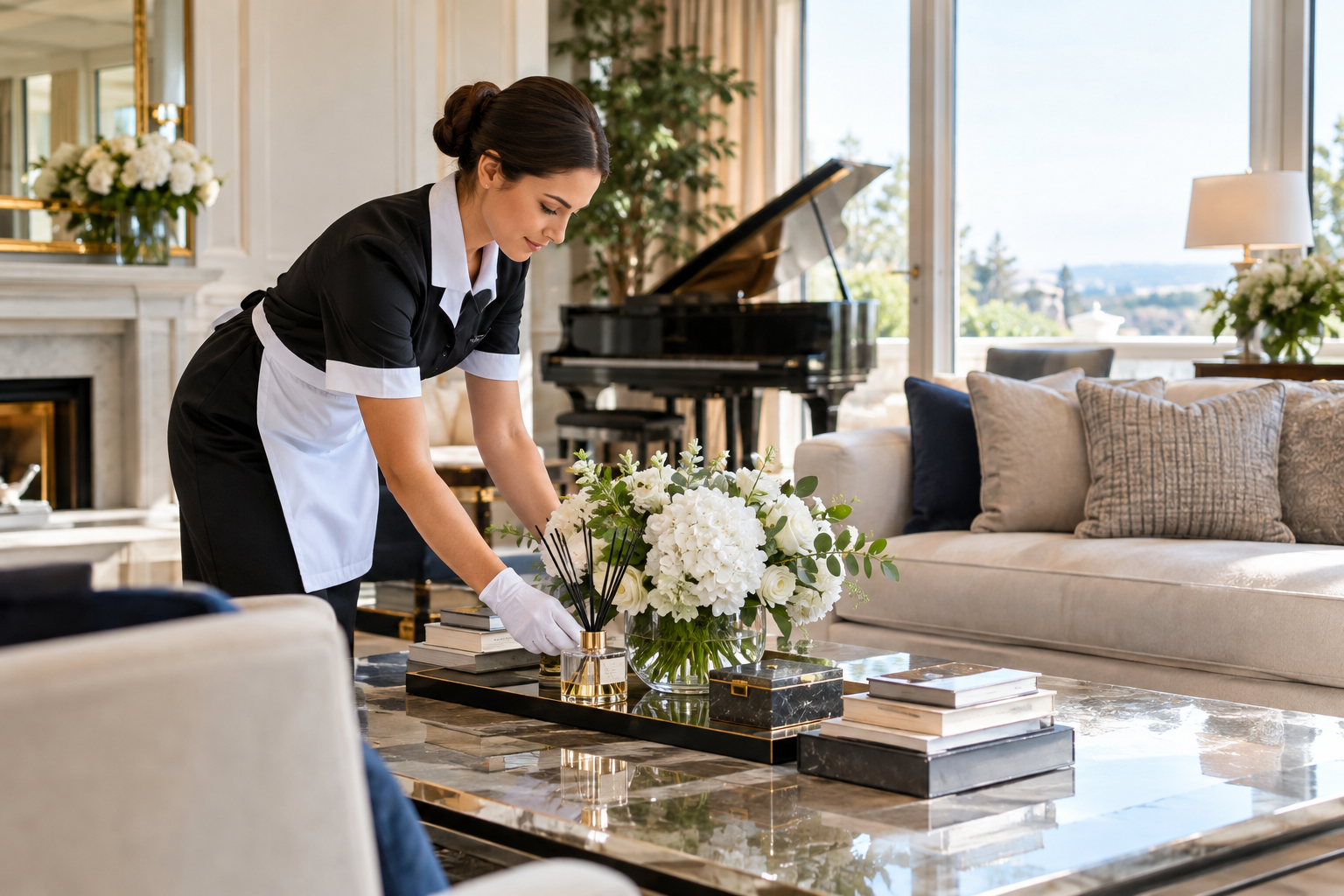
Living Room and Reception Checklist
- Dust tables, shelves, decorative objects and suitable furniture.
- Clean mirrors and glass surfaces.
- Vacuum carpets and upholstery where appropriate.
- Arrange cushions and throws neatly.
- Inspect rugs for visible marks and correct positioning.
- Clean suitable lamp bases and lighting fixtures.
- Remove unnecessary objects and personal clutter.
- Check that seating is comfortable and arranged appropriately.
- Test lighting and entertainment equipment where relevant.
- Ensure that remote controls are clean and available.
- Check curtains and blinds.
- Remove cleaning equipment and supplies.
- Confirm that room temperatures are comfortable.
Artwork, antiques and valuable decorative objects should be treated with particular care. Staff should not move, polish or clean delicate items unless they have been authorised and understand the correct procedure.
Dining Rooms and Formal Entertaining Areas
If guests will be dining at the residence, preparation may involve coordination between housekeeping, the chef and the household’s service staff.
The dining room should be clean, well presented and ready for the planned occasion.
Check the table, chairs, flooring, lighting and surrounding surfaces. Ensure that glassware, cutlery, crockery and serving pieces are clean and appropriate for the meal.
If a formal table setting is required, confirm the menu and service arrangements before placing items.
For larger gatherings, the household manager or butler may coordinate the sequence of service, while the housekeeper ensures that the room and textiles meet the required standards.
Step 7: Ensure the Kitchen Is Immaculate and Fully Prepared
Even when guests will not cook for themselves, the kitchen plays an important role in maintaining household standards.
A clean, organised kitchen supports food preparation, refreshments and smooth coordination between household staff.
Kitchen Housekeeping Checklist
- Clean worktops using products suitable for their materials.
- Clean sinks, taps and splashbacks.
- Check that the hob and oven exterior are clean.
- Clean the refrigerator exterior and accessible interior areas as required.
- Remove expired food according to household procedures.
- Ensure that food storage areas are clean and organised.
- Clean visible appliance surfaces.
- Empty bins and replace liners.
- Check that dishwashers and other essential appliances are functioning.
- Ensure that clean crockery and glassware are available.
- Organise tea, coffee and refreshment supplies.
- Remove unnecessary packaging and clutter.
- Check that floors are clean and dry.
If the residence has a private chef, housekeeping should coordinate with the chef before rearranging food storage or kitchen equipment.
The kitchen must remain functional throughout preparations. Cleaning should not interfere with scheduled cooking, food safety procedures or the chef’s established organisation.
Coordinate Food and Refreshments
Confirm who is responsible for purchasing, storing and preparing refreshments for arriving guests.
The household may wish to provide chilled water, tea, coffee or light refreshments immediately upon arrival. If guests are expected late in the evening, appropriate arrangements should be made in advance.
All food should be stored safely, and staff should follow the household’s hygiene standards.
Step 8: Launder and Press Guest Linen and Clothing Correctly
Laundry is one of the most important responsibilities in professional housekeeping, particularly when preparing a luxury residence for visitors.
Fresh linen, neatly pressed garments and carefully handled textiles contribute to the overall quality of the guest experience.
However, luxury fabrics require knowledge and precision. Fine cotton, silk, cashmere, wool, linen and designer garments may have specific care requirements.
Laundry Preparation Checklist
- Identify all bedding, towels and guest linen required.
- Check linen for stains or damage before washing.
- Separate items according to colour, fabric and care requirements.
- Follow care labels and established household instructions.
- Use appropriate detergents and washing programmes.
- Avoid overloading washing machines.
- Ensure that items are completely dry before storage.
- Press or steam items only when suitable.
- Fold and store clean linen in designated areas.
- Keep clean linen separate from used laundry.
- Inspect finished items before placing them in guest rooms.
Stains should be treated using methods appropriate to the fabric. Aggressive stain removal can damage fibres or permanently affect colours.
For delicate, valuable or unfamiliar textiles, professional dry cleaning may be the safest option.
Prepare Dressing Gowns, Slippers and Guest Clothing
If the household provides dressing gowns, slippers or other garments for guests, check that each item is clean, presentable and suitable for the intended user.
Where guests have requested laundry or pressing services during their stay, agree on the collection, handling and return arrangements.
Personal garments should never be washed, ironed or moved without appropriate permission.
A professional housekeeper understands that care for clothing involves not only technical skill but also respect for privacy and personal belongings.
Step 9: Prepare the Home for Children and Family Guests
VIP guests may arrive with children or other family members whose needs differ from those of adult visitors.
The household should confirm any additional requirements before preparing the relevant rooms and shared spaces.
Family Guest Preparation Checklist
- Prepare suitable sleeping arrangements.
- Provide age-appropriate bedding where requested.
- Check that furniture and equipment are safe and stable.
- Remove hazardous cleaning products and equipment.
- Ensure that accessible areas are free from unnecessary obstacles.
- Prepare approved refreshments and essential supplies.
- Confirm whether high chairs, travel cots or other equipment are required.
- Check that bathrooms have suitable arrangements.
- Remove fragile or valuable objects from areas where additional precautions are necessary.
Safety requirements should be assessed individually rather than assumed. Any childcare equipment must be appropriate for the child’s age and used according to its instructions.
If the family requires dedicated childcare during the visit, a professional nanny may be an important addition to the household team.
Fully Staffed provides recruitment services for private households seeking experienced childcare professionals. Families can explore our live-in nanny London recruitment service or read our guide on how to choose the right nanny.
Step 10: Prepare Guest Rooms in Country Houses and Large Estates
Preparing a large private residence presents additional challenges. Country estates and substantial family homes may contain multiple guest bedrooms, staff areas, reception rooms, extensive grounds and facilities that are not used every day.
The preparation process must account for the property’s size and the distance between different areas.
Inspect Rooms That Have Been Unoccupied
Guest rooms in second homes or large estates may remain unused for extended periods.
Before welcoming visitors, check for dust, stale air, dampness, pests, plumbing issues and other signs that the rooms require additional attention.
Inspect mattresses, upholstered furniture, curtains, wardrobes and storage areas. Confirm that heating, ventilation and lighting are functioning correctly.
Rooms that have been closed for months may require more than a routine clean.
Check Seasonal Facilities and Outdoor Areas
Depending on the property, guests may expect to use terraces, gardens, swimming pools, gyms, spas or outdoor dining areas.
Coordinate with the relevant maintenance or groundskeeping staff to ensure that these spaces are safe, clean and ready for use.
Check outdoor furniture, cushions, lighting, pathways and accessible entrances.
Any technical equipment or specialist facilities should be inspected by suitably qualified personnel where necessary.
Coordinate Staff Across the Property
In a large residence, an organised staffing structure is essential.
A Head Housekeeper may oversee bedroom preparation, linen management and cleaning standards, while a House Manager coordinates property operations, maintenance and wider household requirements.
For more information about professional household staffing, visit Fully Staffed’s services page or explore our domestic staff recruitment services.
Step 11: Establish a Final Inspection Procedure
The final inspection should take place after the main cleaning, linen preparation and amenity placement have been completed.
Its purpose is to identify small omissions before the guests arrive and ensure that every room meets the household’s standards.
A consistent inspection procedure is particularly valuable when several staff members have contributed to the preparation.
Guest Bedroom Final Inspection
Check that:
- The bed is properly made with fresh linen.
- Bedside tables and other visible surfaces are clean.
- Mirrors and windows are free from obvious marks.
- Wardrobes and drawers are ready for use.
- Towels and guest amenities are present.
- Lighting and electrical equipment are functioning.
- Temperature controls work correctly.
- Floors are clean and free from debris.
- Curtains and blinds operate properly.
- No cleaning equipment or personal staff belongings remain.
Guest Bathroom Final Inspection
Check that:
- Toilets, baths, showers and basins are clean.
- Mirrors and taps are presentable.
- Towels are fresh and neatly arranged.
- Toiletries are available as agreed.
- Bins are empty.
- Floors are dry.
- Drains are clear and there are no unusual odours.
- Water supply and essential fittings function correctly.
Shared Areas Final Inspection
Check that:
- Reception rooms are clean and organised.
- Seating is arranged appropriately.
- Dining areas are ready for their intended use.
- Kitchen surfaces and essential supplies are prepared.
- Entrance areas are presentable.
- Lighting and room temperatures are appropriate.
- Guest routes through the property are clear.
- Maintenance issues have been addressed or reported.
Conduct a Final Walkthrough as a Guest Would Experience It
Rather than checking each item in isolation, walk through the residence from the entrance to the guest bedroom and bathroom.
Consider what the guest will see first, where they will place their belongings and whether anything appears unfinished.
Look for fingerprints, misplaced objects, visible cables, unpleasant smells, uneven bedding or unnecessary clutter.
This final walkthrough helps identify issues that may be overlooked when staff are focused on individual cleaning tasks.
Once the property is ready, communicate completion to the household manager or principal’s representative. Any outstanding issue should be reported honestly, together with the proposed solution.
Step 12: Maintain Discretion and Professional Boundaries
Exceptional housekeeping is not limited to cleaning and presentation. In a private household, professional conduct is equally important.
VIP guests may discuss confidential business matters, family arrangements or personal issues within the residence. Household staff must understand that access to private spaces does not give them permission to share or use the information they encounter.
Essential Standards of Professional Conduct
Respect privacy. Knock before entering occupied rooms and follow the household’s instructions regarding access.
Protect personal belongings. Do not move documents, jewellery, electronics or luggage unnecessarily. Report any lost property or damage promptly.
Maintain confidentiality. Do not discuss guests, household arrangements or private conversations with unauthorised people.
Communicate professionally. Keep the principal, House Manager or designated representative informed about relevant issues without creating unnecessary interruptions.
Respect personal preferences. Follow confirmed instructions concerning room preparation, amenities and service.
Use sound judgement. Anticipate reasonable needs while recognising when permission or clarification is required.
Maintain professional appearance. Follow the household’s dress code and standards of personal presentation.
These principles are particularly important in residences where several household staff members work together or where visitors require a high level of discretion.
Step 13: Coordinate the Household Team Effectively
For a simple guest visit, one experienced housekeeper may be able to manage the preparation independently. For larger residences or formal occasions, several professionals may be required.
The right staffing structure depends on the property’s size, the number of guests, the services expected and the time available.
The Role of a Professional Housekeeper
A housekeeper typically takes responsibility for cleaning, laundry, linen management, room preparation and the organisation of household supplies.
An experienced housekeeper can also identify maintenance concerns, coordinate specialist cleaning and maintain consistent standards throughout the property.
For families seeking professional support in London, Fully Staffed offers recruitment for both live-out housekeepers in London and live-in housekeepers in London.
The appropriate arrangement depends on the household’s daily routine, accommodation availability and the level of support required.
The Role of a Head Housekeeper
In a larger household, a Head Housekeeper supervises the housekeeping team and ensures that cleaning, laundry and room preparation meet the required standard.
Responsibilities may include allocating duties, managing linen inventories, checking supplies, training staff and inspecting completed work.
During VIP preparations, the Head Housekeeper can divide the residence into zones, set deadlines and verify that all rooms are ready.
The Role of a House Manager
A House Manager oversees the wider operation of a private residence.
Depending on the household, responsibilities may include coordinating staff schedules, arranging maintenance, managing suppliers, supervising service standards and ensuring that the property is prepared for visitors.
The House Manager can act as the central point of communication between the principal, personal assistant, housekeeping team and other household professionals.
The Role of a Butler
Where formal hospitality is required, a Butler may oversee guest-facing service, dining arrangements, refreshments, table presentation and coordination during receptions or private events.
The Butler and Housekeeper should work together to ensure that the property is clean and presentable before service begins.
Clear responsibilities prevent duplication and allow each professional to focus on their area of expertise.
Create a Shared Preparation Checklist
A written checklist helps everyone understand their responsibilities.
For example, the housekeeper may be responsible for guest bedrooms and bathrooms, while the chef manages food preparation and the butler prepares dining areas and refreshments.
The House Manager can coordinate maintenance and confirm completion across the property.
Short, well-timed updates help the team identify problems early without creating unnecessary meetings or interrupting essential work.
Step 14: Plan the Timing of Preparations
The amount of time required depends on the property, its current condition, the number of guests and the services expected.
A small apartment prepared for two guests may require substantially less work than a large country estate with several guest suites and formal entertaining areas.
The following schedule provides a practical starting point.
Several Days Before Arrival
- Confirm guest requirements and arrival arrangements.
- Inspect the property and identify maintenance issues.
- Prepare the cleaning and staffing schedule.
- Arrange specialist cleaning or repairs.
- Check linen, towels, toiletries and household supplies.
- Begin deep cleaning less frequently used areas.
- Coordinate any catering or hospitality requirements.
One to Two Days Before Arrival
- Complete the main cleaning of guest bedrooms and bathrooms.
- Launder and prepare bed linen and towels.
- Clean reception rooms and dining areas.
- Inspect guest wardrobes and storage.
- Confirm that appliances and essential facilities are working.
- Prepare approved guest amenities.
- Check kitchen supplies and refreshment arrangements.
- Confirm that all staff understand their responsibilities.
On the Day of Arrival
- Complete final cleaning and surface checks.
- Make the beds and arrange fresh towels.
- Check guest amenities and refreshments.
- Ensure that the entrance and reception areas are ready.
- Confirm that room temperatures and lighting are appropriate.
- Remove all cleaning equipment and supplies.
- Conduct the final walkthrough.
- Notify the designated household representative that preparations are complete.
The schedule should remain flexible. If arrival times change, the team should prioritise essential tasks and communicate any resulting adjustments.
Step 15: Avoid Common Mistakes When Preparing a Luxury Home
Even experienced household staff can overlook details when working under pressure. A consistent process helps prevent common errors.
Leaving Preparation Until the Last Minute
Late preparation increases stress and reduces the time available for inspections or repairs.
The solution: Establish a schedule as soon as the visit is confirmed and complete major tasks well before arrival.
Using the Wrong Cleaning Products
Incorrect products can damage marble, natural wood, silk, delicate upholstery and specialist finishes.
The solution: Follow material-specific care instructions and seek specialist advice when necessary.
Overlooking Small Details
Fingerprints, empty dispensers, dusty lampshades and poorly arranged towels can undermine an otherwise immaculate room.
The solution: Use a room-by-room checklist and conduct a final inspection after all preparations are complete.
Overloading Rooms With Amenities
Too many decorative items, strong fragrances or unnecessary products can make a room feel cluttered.
The solution: Prioritise comfort, quality and the guest’s known preferences.
Failing to Coordinate Staff
When responsibilities are unclear, important tasks may be duplicated or missed entirely.
The solution: Assign each task to a named person and use clear deadlines.
Ignoring Maintenance Problems
A beautifully cleaned bathroom is not ready if the shower is faulty or the lighting does not work.
The solution: Inspect the property early and report maintenance issues immediately.
Making Assumptions About Guest Preferences
Expensive products, particular room arrangements or elaborate welcome gifts may not suit every visitor.
The solution: Confirm preferences through the appropriate household contact and avoid unnecessary changes.
Neglecting Staff Communication
Even a well-prepared home can experience problems if arrival arrangements or last-minute changes are not communicated.
The solution: Ensure that the relevant staff members receive accurate, timely updates and know whom to contact when decisions are required.
Step 16: Maintain Luxury Standards Throughout the Guest’s Stay
Preparing the residence is only the beginning. Maintaining its standards throughout the visit requires an appropriate daily housekeeping routine and clear communication with the household.
The frequency of cleaning and the level of interaction should reflect the guests’ preferences.
Some visitors may expect daily room servicing, fresh towels and regular laundry. Others may prefer minimal interruption and complete privacy.
Daily Guest Room Checklist
- Confirm the preferred time for housekeeping.
- Make beds according to the household’s standards.
- Refresh towels when required.
- Empty bins and remove rubbish.
- Clean bathroom surfaces and replenish essential amenities.
- Remove used cups, glasses and approved refreshments.
- Arrange cushions and other items neatly.
- Report maintenance issues or damaged items.
- Collect laundry only according to agreed arrangements.
- Ensure that rooms are ready for the guests’ return.
Staff should respect personal belongings and avoid reorganising items that guests have deliberately placed in particular locations.
Monitor Supplies and Anticipate Needs
During longer stays, check the availability of towels, toiletries, drinking water and other essential supplies.
Restocking should be discreet and should not result in unnecessary waste.
If guests have changing requirements, the designated household representative should communicate these to the team.
Prepare for Departure
When guests leave, inspect the rooms for forgotten belongings and follow the household’s lost-property procedures.
Arrange laundry, remove used linen, clean bathrooms and return rooms to their standard condition.
Any damage or missing items should be reported appropriately, without making assumptions about responsibility.
A professional departure procedure ensures that the residence is ready for the next visit and that valuable items are handled correctly.
How to Recruit the Right Housekeeper for a Luxury Private Residence
The quality of guest preparation depends significantly on the experience, judgement and reliability of the person responsible for housekeeping.
A candidate may have extensive experience cleaning residential properties but lack the specialist knowledge required for an UHNW household. Conversely, a highly skilled housekeeper may be accustomed to a particular staffing structure or working arrangement that does not suit the family’s needs.
Recruitment should therefore consider both technical ability and professional compatibility.
Assess Relevant Experience
Look for evidence that candidates have worked in environments with comparable standards and responsibilities.
Relevant experience may include luxury private residences, substantial family homes, serviced residences, prestigious hospitality environments or households requiring detailed laundry and linen management.
Ask candidates to explain their responsibilities rather than relying solely on job titles.
For example, a candidate who has independently managed guest suites, cared for delicate textiles and coordinated room preparation may be well suited to a household that regularly welcomes important visitors.
Evaluate Practical Housekeeping Knowledge
Where appropriate, assess the candidate’s knowledge of:
- Cleaning different surfaces and materials.
- Caring for luxury fabrics and designer clothing.
- Preparing beds and guest bedrooms.
- Managing laundry and pressing.
- Maintaining linen inventories.
- Organising household supplies.
- Identifying maintenance issues.
- Working with household managers and other staff.
- Following confidentiality and security procedures.
Practical examples and scenario-based questions can help establish whether a candidate understands the standards expected in a private household.
Check References and Employment History
Professional references are important when recruiting domestic staff for private homes.
With the candidate’s appropriate consent, verify previous employment, responsibilities, dates and relevant performance information. Any required background checks should be conducted lawfully and in accordance with applicable requirements.
Recruitment decisions should be based on verified information, relevant experience and the household’s genuine needs.
Assess Personal Qualities
Technical skills alone are not sufficient.
A strong luxury housekeeper should demonstrate reliability, discretion, organisation, attention to detail, initiative and the ability to follow instructions.
Professional communication is equally important, particularly in households where several staff members work together.
Candidates should understand when to act independently, when to ask for clarification and how to report issues without disrupting the principal unnecessarily.
Choose the Right Employment Arrangement
The most suitable arrangement depends on the family’s schedule, the residence and the responsibilities involved.
A live-in housekeeper may suit a household requiring regular support throughout the week, particularly where accommodation is available and the employment terms are appropriate.
A live-out housekeeper may be more suitable where the family requires defined working hours or where accommodation is not available.
For households with frequent visitors, extensive properties or complex service requirements, a Head Housekeeper or House Manager may provide the additional coordination needed.
Fully Staffed supports families in identifying domestic staff whose experience and working arrangements match the requirements of their household.
You can learn more about Fully Staffed, explore our domestic staff recruitment services or contact our domestic staff agency in the UK to discuss your requirements.
Why Professional Housekeeping Matters in HNW and UHNW Households
For affluent families, a well-maintained residence is an important part of everyday life. It supports comfort, privacy, entertaining and the smooth running of the household.
When VIP guests arrive, professional housekeeping becomes particularly visible because the quality of preparation affects almost every part of their stay.
An experienced housekeeper understands that luxury standards are built through consistent routines rather than occasional intensive cleaning. The work involves preserving valuable materials, maintaining organisation, anticipating needs and ensuring that every room is ready for use.
The benefits extend beyond presentation.
Protecting Valuable Interiors and Belongings
Correct cleaning and textile care help preserve furniture, flooring, artwork, clothing and other valuable possessions.
Preventative attention can also identify minor problems before they become more serious.
Improving Household Efficiency
A well-organised preparation process reduces duplicated work, unnecessary purchases and last-minute interruptions.
Clear systems allow household staff to work efficiently while maintaining high standards.
Supporting Privacy and Comfort
Professional staff understand the importance of discretion and can provide hospitality without intruding on the guests’ privacy.
This balance is particularly valuable in residences where visitors expect both excellent service and a relaxed atmosphere.
Maintaining Consistent Standards
A reliable housekeeper or Head Housekeeper ensures that the property remains presentable throughout the visit, not only on the day the guests arrive.
For families who entertain regularly, this consistency can make a significant difference to the overall running of the home.
Professional VIP Guest Preparation Checklist: Complete Summary
The following checklist can be used as a final reference before welcoming guests to a luxury residence.
Property and Planning
Confirm arrival arrangements and guest requirements.
Inspect the property and identify maintenance issues.
Allocate responsibilities to household staff.
Confirm that cleaning products and supplies are available.
Arrange specialist services where necessary.
Entrance and Reception Areas
Clean entrance flooring, doors and visible surfaces.
Remove clutter and unnecessary items.
Check lighting and room temperature.
Arrange flowers or decorative elements where appropriate.
Ensure that guest routes are clear and safe.
Guest Bedrooms
Deep clean furniture, mirrors and accessible fixtures.
Vacuum carpets or clean hard flooring.
Prepare fresh bed linen and pillows.
Arrange cushions and throws neatly.
Clean wardrobes and drawers.
Check lighting, curtains and temperature controls.
Provide agreed guest amenities.
Guest Bathrooms
Clean toilets, showers, baths and basins.
Clean mirrors, taps and suitable fittings.
Provide fresh towels and bath mats.
Replenish toiletries and essential supplies.
Empty bins and ensure that floors are dry.
Check water supply, drainage and ventilation.
Kitchen and Dining Areas
Clean worktops, sinks and visible appliances.
Organise refreshments and essential supplies.
Confirm dietary requirements with the appropriate staff.
Prepare crockery, cutlery and glassware.
Set the dining area according to the planned arrangements.
Coordinate with the chef and service team.
Laundry and Linen
Wash and prepare guest linen correctly.
Inspect towels and bedding for stains or damage.
Press suitable items and store them properly.
Prepare dressing gowns and slippers where provided.
Keep clean and used laundry separate.
Final Inspection
Walk through the property as a guest would.
Check for fingerprints, dust, odours and misplaced items.
Confirm that all rooms are ready for use.
Remove cleaning equipment and supplies.
Resolve or report outstanding issues.
Confirm completion with the designated household representative.
Frequently Asked Questions About Preparing a Luxury Home for VIP Guests
How far in advance should a luxury home be prepared for VIP guests?
Preparation should begin as soon as the visit is confirmed. A residence in good condition may require only a short preparation period, while a large estate, an unoccupied second home or a property hosting several visitors may need several days or longer.
The schedule should allow sufficient time for deep cleaning, laundry, maintenance, stocking amenities and a final inspection.
What does a professional housekeeper do before VIP guests arrive?
A professional housekeeper prepares guest bedrooms and bathrooms, cleans reception areas, manages linen and laundry, organises approved amenities, checks household supplies and ensures that the property meets the required standard.
Depending on the household, the role may also involve coordinating specialist cleaning, reporting maintenance issues and working with a Head Housekeeper, House Manager or Butler.
What should be included in a VIP guest bedroom?
A well-prepared guest bedroom should contain clean, comfortable bedding, fresh towels, adequate storage, working lighting, suitable temperature controls and essential amenities.
Additional items may include drinking water, toiletries, dressing gowns, slippers and charging facilities. The exact selection should reflect the household’s standards and the guest’s known preferences.
How can household staff maintain discretion when VIP guests are staying?
Staff should follow confidentiality policies, respect private spaces, handle personal belongings carefully and communicate only with authorised individuals.
They should also avoid discussing guest information outside the household and follow any specific security or access procedures established by the principal.
Is a live-in or live-out housekeeper better for a luxury household?
Neither arrangement is universally better. A live-in housekeeper may suit a household requiring regular support and offering appropriate accommodation. A live-out housekeeper may be preferable where the family needs support during defined hours or does not have staff accommodation.
The decision should consider the workload, schedule, property, employment terms and the candidate’s experience.
When should a household hire a Head Housekeeper?
A Head Housekeeper may be appropriate when the residence has multiple bedrooms, a large housekeeping team, frequent visitors or complex laundry and linen requirements.
The role provides supervision, quality control and coordination, helping ensure that the household maintains consistent standards.
Why use a specialist domestic staff recruitment agency?
A specialist agency can help families identify candidates whose experience, practical skills and professional conduct match the demands of a private household.
Recruitment support can also assist with assessing employment history, obtaining references and identifying the most appropriate staffing arrangement for the property.
Families can discuss their requirements with Fully Staffed.
Conclusion: Creating an Exceptional Guest Experience Through Professional Housekeeping
Preparing a luxury home for VIP guests requires careful planning, technical housekeeping knowledge, attention to detail and a coordinated approach to household management.
From immaculate guest bedrooms and beautifully presented bathrooms to properly maintained reception areas, fresh linen and thoughtfully selected amenities, every element contributes to the overall experience.
The most successful preparations begin well in advance, follow a clear checklist and include a final inspection before arrival. Equally important are professional discretion, effective staff communication and an understanding that luxury hospitality should feel effortless to the guest.
For HNW and UHNW families, recruiting the right domestic staff is an investment in the long-term quality and smooth operation of the home. An experienced housekeeper can maintain exceptional standards, protect valuable interiors, anticipate household needs and ensure that the residence is always ready to welcome visitors.
At Fully Staffed, we specialise in recruiting experienced domestic and household professionals for private families in London and internationally. Whether you require a Housekeeper, Head Housekeeper, House Manager, Butler or another household professional, our recruitment service is designed to help you identify candidates suited to your property’s standards and requirements.
Visit Fully Staffed to learn more about our approach, explore our staff recruitment services or contact our team to discuss your household’s needs.
If you are an experienced domestic professional seeking your next opportunity, you can also visit our domestic staff jobs application page.
With the right people, clear procedures and consistent attention to detail, preparing a luxury residence for VIP guests becomes a well-managed process that reflects the highest standards of private household service.