How to Manage an UHNW Wardrobe: A Complete Private Household Guide
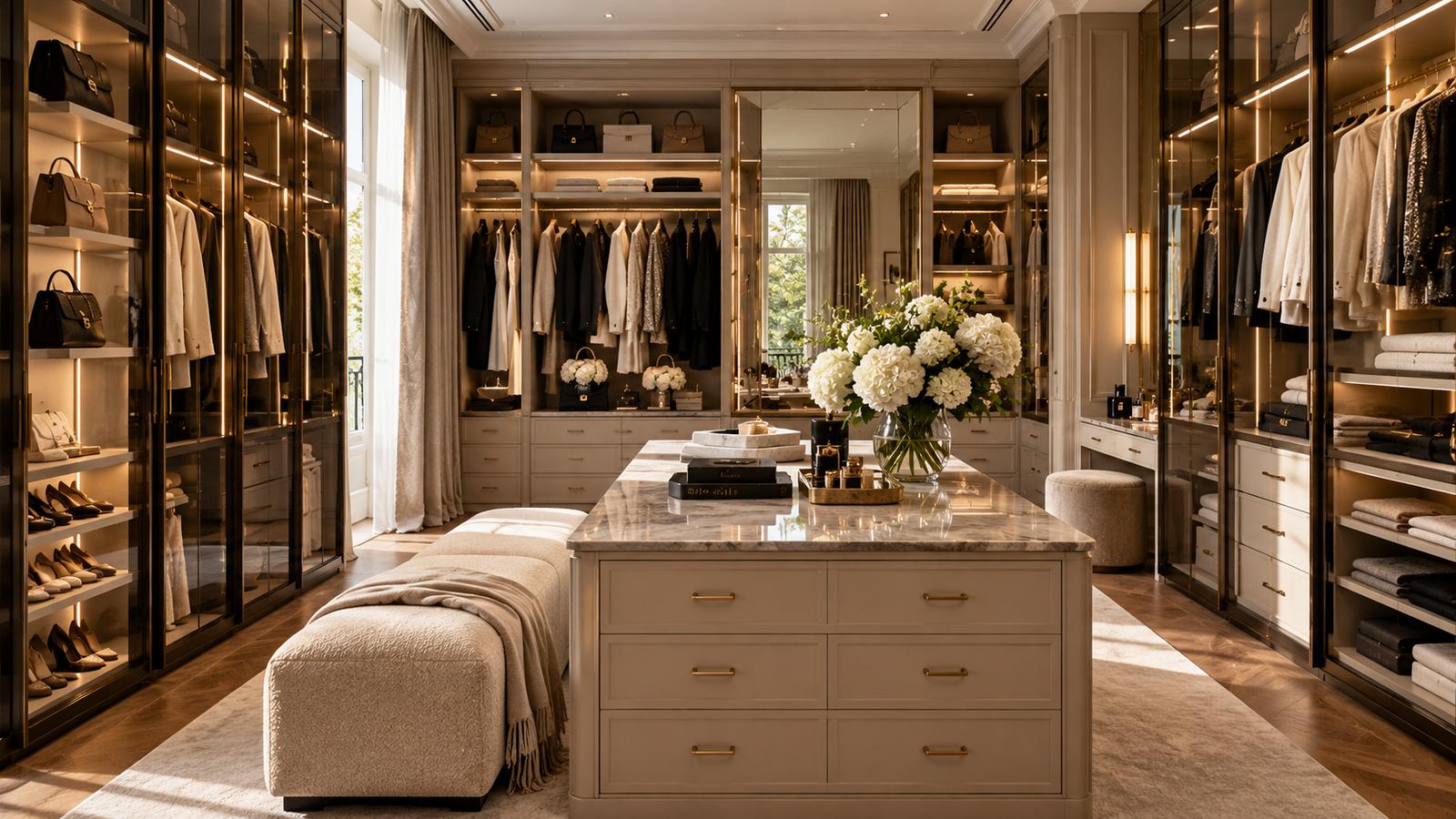
Managing an UHNW wardrobe requires far more than keeping clothes organised. For high-net-worth and ultra-high-net-worth households, wardrobe management can involve luxury garment care, couture, seasonal organisation, international travel, event preparation and strict privacy.
A professional UHNW wardrobe management system ensures that clothing, shoes, handbags and accessories remain organised, protected and ready when needed.
For larger residences, wardrobe responsibilities may form part of a wider private household staffing structure. Understanding how different household roles work together is therefore essential when building a professional team. Read our guide on How to Build a Private Household Staff Team for a UHNW Family.
What Is UHNW Wardrobe Management?
UHNW wardrobe management is the professional organisation, maintenance and coordination of a principal’s personal wardrobe.
It can include:
- clothing organisation
- luxury garment care
- couture and bespoke garment management
- seasonal wardrobe rotation
- shoe and handbag organisation
- accessory management
- packing for international travel
- outfit preparation
- alterations and repairs
- dry cleaning and specialist cleaning
- wardrobe inventory
- storage management
- event and travel preparation
Unlike a standard domestic wardrobe, an UHNW wardrobe can contain hundreds or even thousands of individual pieces.
Consequently, organisation alone is not enough. Every item needs an appropriate place, care routine and system.
Why Does an UHNW Wardrobe Require Specialist Management?
Luxury clothing often requires specialist handling.
Couture, bespoke tailoring, cashmere, silk, leather, embroidery and delicate fabrics can require very different storage and cleaning methods.
Furthermore, an UHNW wardrobe may be spread across several residences.
A principal may have wardrobes in:
- London
- a country estate
- a European residence
- a holiday property
- a yacht
- a seasonal destination
As a result, private household wardrobe management needs to consider both the wardrobe itself and the lifestyle of the principal.
The objective is simple: everything should be easy to find, properly maintained and available when required.
1. Create a Complete Wardrobe Inventory
The first step in professional wardrobe management is knowing exactly what exists.
A wardrobe inventory can include:
- designer clothing
- couture
- bespoke suits
- eveningwear
- shoes
- handbags
- jewellery
- watches
- belts
- scarves
- hats
- travel accessories
- seasonal items
Each category should have a logical location.
For particularly extensive wardrobes, a digital inventory can also record:
- designer
- garment type
- colour
- size
- purchase date
- alterations
- cleaning history
- storage location
- condition
This makes the wardrobe easier to manage and reduces the risk of items being forgotten or misplaced.
2. Organise the Wardrobe Around the Principal’s Lifestyle
A successful luxury wardrobe management system should reflect how the principal actually lives.
Everyday Wardrobe
Everyday clothing should be accessible and easy to coordinate.
Items can be organised according to:
- type
- colour
- season
- frequency of use
- preferred combinations
The system should make everyday dressing effortless.
Formalwear
Eveningwear and formal clothing require additional care.
Suits, tuxedos, evening dresses and formal accessories should be stored correctly and checked regularly.
For example, garments may require professional steaming before an event rather than last-minute preparation.
Travel Wardrobe
International travel creates another layer of complexity.
A professional wardrobe manager may prepare complete travel selections based on:
- destination
- weather
- itinerary
- events
- business commitments
- formal occasions
- length of stay
This allows the principal to travel without spending unnecessary time organising clothing.
Seasonal Wardrobe
Seasonal rotation keeps the main wardrobe uncluttered.
Winter clothing can be professionally cleaned before storage, while summer collections can be prepared in advance.
However, storage conditions must protect delicate materials from humidity, light, insects and temperature fluctuations.
Couture and Special Collections
Couture pieces require particularly careful handling.
Each garment should have appropriate storage, cleaning and inspection procedures.
Where necessary, specialist cleaners, tailors and couture houses should be involved.
3. Protect Luxury and Delicate Garments
Luxury garment care is an essential part of wardrobe management.
Different materials require different approaches.
For example:
- cashmere requires careful folding and protection from moths
- silk requires appropriate hanging or folding
- leather requires controlled storage conditions
- couture pieces may require specialist garment bags
- heavily embellished garments may need additional structural support
Hangers should also be appropriate for the garment.
Heavy jackets, delicate dresses and tailored pieces should not automatically be treated in the same way.
Regular inspections can identify:
- stains
- loose buttons
- damaged seams
- missing accessories
- worn linings
- alterations required
Early intervention can prevent minor problems from becoming expensive repairs.
4. Manage Couture and Bespoke Clothing
Couture and bespoke garments require a particularly high standard of couture garment care.
These pieces may involve delicate embroidery, unusual fabrics, hand-finishing or complex construction.
A wardrobe manager should therefore maintain records of:
- specialist cleaners
- designers
- tailors
- alterations
- repair requirements
- garment storage
- previous cleaning
Before important events, garments should be inspected and prepared well in advance.
This avoids last-minute problems.
5. Organise Shoes, Handbags and Accessories
Wardrobe management extends beyond clothing.
Shoes, handbags and accessories should also form part of the system.
Shoes
Shoes should be stored according to material and construction.
Leather shoes may require shoe trees, while delicate materials may require individual protective storage.
Handbags
Luxury handbags should be protected from:
- humidity
- direct sunlight
- pressure
- dust
- incorrect storage
Where appropriate, bags should be stored with their original protective materials.
Accessories
Belts, scarves, hats and other accessories should remain visible and accessible.
A well-organised accessory system makes outfit preparation significantly faster.
6. Prepare the Wardrobe for International Travel
Travel is one of the areas where professional wardrobe management for UHNW clients can provide significant value.
Before travelling, the wardrobe manager should review the itinerary.
For example:
London → Paris → Monaco → Dubai
Each destination may require a different wardrobe.
The preparation process can include:
- Reviewing the itinerary.
- Checking the weather.
- Identifying formal events.
- Selecting complete outfits.
- Preparing shoes and accessories.
- Arranging specialist cleaning.
- Packing garments appropriately.
- Coordinating luggage.
- Preparing travel documents where relevant.
- Checking the wardrobe again before departure.
For families with multiple residences, this process can also involve coordinating wardrobes between properties.
7. Manage Seasonal Wardrobe Changes
Seasonal wardrobe changes should follow a structured process.
At the end of a season:
- garments should be inspected
- items requiring cleaning should be sent to specialists
- repairs should be completed
- unwanted pieces should be identified
- storage should be prepared
- the incoming season should be organised
This prevents the wardrobe from becoming overcrowded.
It also means that the principal can begin a new season with everything prepared.
8. Prepare Outfits for Important Events
A professional private wardrobe manager may also prepare clothing for important occasions.
These can include:
- weddings
- charity events
- diplomatic functions
- business dinners
- private parties
- red-carpet events
- formal receptions
- international travel
The complete look may include clothing, shoes, handbag, jewellery and other accessories.
Preparation should happen early enough to allow for alterations, steaming or specialist cleaning.
9. Maintain Privacy and Discretion
Privacy is fundamental to UHNW private household staffing.
A wardrobe professional may have access to highly personal information about the principal.
This can include:
- travel plans
- event schedules
- personal preferences
- designer purchases
- residences
- family information
Therefore, discretion must be treated as part of the role rather than an optional quality.
Professional boundaries should remain clear at all times.
This principle applies across the wider household team. Our Private Household Staff Agency UK recruitment service focuses on professionals suited to private family environments.
Wardrobe Manager vs Housekeeper: What Is the Difference?
The responsibilities can overlap, but the roles are not identical.
Housekeeper
A private housekeeper may manage:
- cleaning
- laundry
- ironing
- household organisation
- bedrooms
- bathrooms
- supplies
- general wardrobe care
In some households, an experienced housekeeper may also coordinate aspects of wardrobe management.
Our Housekeeper Agency London specialises in recruiting housekeepers for private residences and UHNW households.
Wardrobe Manager
A dedicated UHNW Wardrobe Manager has a more specialised focus.
Responsibilities may include:
- complete wardrobe inventory
- luxury garment care
- couture management
- designer relationships
- alterations
- seasonal rotation
- packing
- outfit preparation
- shoe and handbag management
- wardrobe organisation across multiple residences
For a very large wardrobe, a dedicated specialist can therefore provide a higher level of organisation.
When Does a Private Household Need a Wardrobe Manager?
Not every household requires a dedicated wardrobe manager.
The position may become appropriate when:
- the wardrobe is particularly extensive
- the principal travels frequently
- the family owns multiple residences
- the principal attends frequent formal events
- there is a significant couture collection
- clothing requires specialist management
- several members of the household require wardrobe support
In smaller households, these responsibilities may instead sit with a senior housekeeper, personal assistant or house manager.
The correct structure depends on the household.
What Skills Should an UHNW Wardrobe Manager Have?
A professional wardrobe manager should combine practical knowledge with exceptional organisation.
Important skills include:
- luxury garment care
- knowledge of fabrics
- wardrobe organisation
- attention to detail
- time management
- travel preparation
- knowledge of designers
- communication skills
- discretion
- confidentiality
- inventory management
- coordination with suppliers
Experience within a private household can also be particularly valuable.
The professional must understand that wardrobe management is ultimately a service role.
The objective is not simply to organise clothing.
It is to make the principal’s daily life easier.
How to Build an Effective Wardrobe Management System
A simple system can be based around five questions.
What Do We Have?
Maintain an accurate inventory.
Where Is Everything?
Every item should have a logical storage location.
What Condition Is It In?
Regular inspections identify cleaning, repair and alteration requirements.
When Will It Be Needed?
Travel, events and seasonal changes should be anticipated.
Who Is Responsible?
Every task should have a clearly defined owner.
This system creates accountability and prevents important tasks from being overlooked.
Hiring a Wardrobe Manager for a Private Household
When hiring a wardrobe manager for an UHNW household, experience should be assessed alongside professional compatibility.
The recruitment process should consider:
- previous private household experience
- luxury wardrobe experience
- knowledge of garment care
- discretion
- organisation
- communication
- flexibility
- international travel experience
- references
For a broader household recruitment requirement, a specialist Domestic Staff Agency UK can help identify the appropriate staffing structure before individual positions are recruited.
Fully Staffed recruits professional domestic staff for private families, estates, HNW and UHNW households across the UK and internationally.
How Wardrobe Management Fits Into a UHNW Household Team
Wardrobe management rarely operates completely independently.
In a larger household, the wardrobe professional may work alongside:
- House Manager
- Head Housekeeper
- Private PA
- Butler
- Personal Assistant
- Chauffeur
- Nanny
- Private Chef
For example, the House Manager may coordinate the wider household while the wardrobe manager handles the principal’s clothing and accessories.
Meanwhile, the PA may coordinate appointments with designers, tailors or boutiques.
This creates a more efficient household structure.
For a broader overview of luxury staffing, see our Complete Guide to Luxury Private Household Staffing.
Build the Right Private Household Staffing Structure
Wardrobe management is only one part of a well-organised private household.
Depending on the family, a complete team may include:
- House Manager
- Estate Manager
- Head Housekeeper
- Private Housekeepers
- Wardrobe Manager
- Nannies
- Private Chef
- Butler
- Chauffeur
- Private PA
- Domestic Couple
The structure should always reflect the family’s lifestyle, property and expectations.
For some households, wardrobe management can sit within housekeeping.
For others, a dedicated specialist may be the most appropriate solution.
The important point is to build the team around the household rather than simply filling standard job titles.
Hiring Private Household Staff for an UHNW Family
Finding the right professional requires more than reviewing a CV.
Private household recruitment should consider:
- previous household experience
- professional references
- responsibilities in previous positions
- discretion
- presentation
- communication
- lifestyle compatibility
- travel requirements
- working arrangements
For UHNW families, the recruitment process should also consider how the candidate will fit into the existing household structure.
At Fully Staffed, we recruit private household staff for HNW and UHNW families, private residences, estates and family offices across the UK and internationally.
Our recruitment includes housekeepers, nannies, private chefs, butlers, chauffeurs, house managers, estate managers, domestic couples and other private household professionals.
Conclusion
Effective UHNW wardrobe management is about much more than keeping clothes organised.
It combines luxury garment care, couture management, seasonal organisation, travel preparation, event planning and complete discretion.
For some households, these responsibilities can be managed by an experienced housekeeper or house manager.
For larger wardrobes and internationally mobile principals, a dedicated UHNW Wardrobe Manager may provide a more specialised solution.
Ultimately, the right wardrobe management structure should reflect the principal’s lifestyle, the scale of the collection and the wider private household staffing structure.
When everything is organised properly, the result is simple: the wardrobe works quietly in the background, while the principal can focus on everything else.